
How to Clean a Leather Couch: The Complete Step-by-Step Guide

A leather couch is more than just a piece of furniture.It’s an investment that adds comfort, elegance, and timeless style to your home. Whether you own a classic Chesterfield sofa, a modern sectional, a leather loveseat, or a recliner, proper maintenance helps preserve its appearance for years.Unlike fabric upholstery, leather is a natural material that requires regular care to stay soft, supple, and free from cracks. Dust, body oils, food spills, pet hair, sunlight, and everyday use can gradually dull its finish if left untreated.The good news is that cleaning a leather couch doesn’t have to be difficult. With the right cleaning products, proper techniques, and a simple maintenance routine, you can safely remove dirt, stains, and odors while protecting the leather’s natural beauty.In this complete guide, you’ll learn how to clean a leather couch step by step, remove common stains, condition leather properly, avoid costly mistakes, and keep your furniture looking like new.
Why Regular Leather Couch Cleaning Is Important
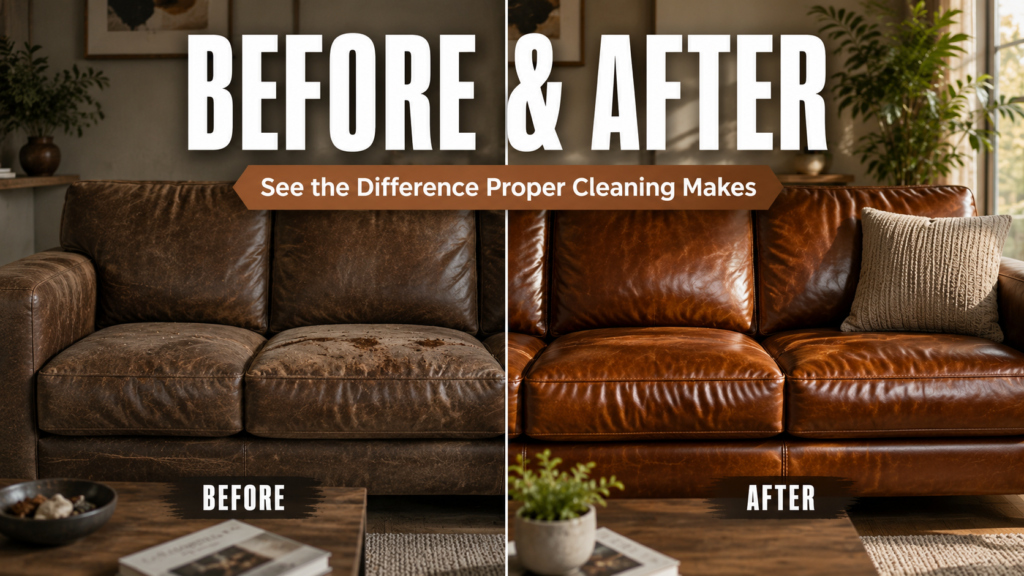
Leather naturally absorbs oils, dust, airborne particles, and moisture from everyday living. Without routine cleaning, these contaminants gradually build up on the surface and begin breaking down the protective finish.
Regular maintenance helps:
- Extend the lifespan of your leather furniture
- Preserve softness and flexibility
- Maintain the leather’s natural grain
- Prevent permanent stains
- Reduce allergens, dust, and pet hair
- Prevent drying and cracking
- Keep your furniture looking luxurious
Proper care also protects the value of expensive leather furniture, making routine cleaning far more affordable than professional restoration.
Identify Your Leather Before Cleaning
Before using any cleaner, identify the type of leather you have. Different leather finishes require slightly different care.
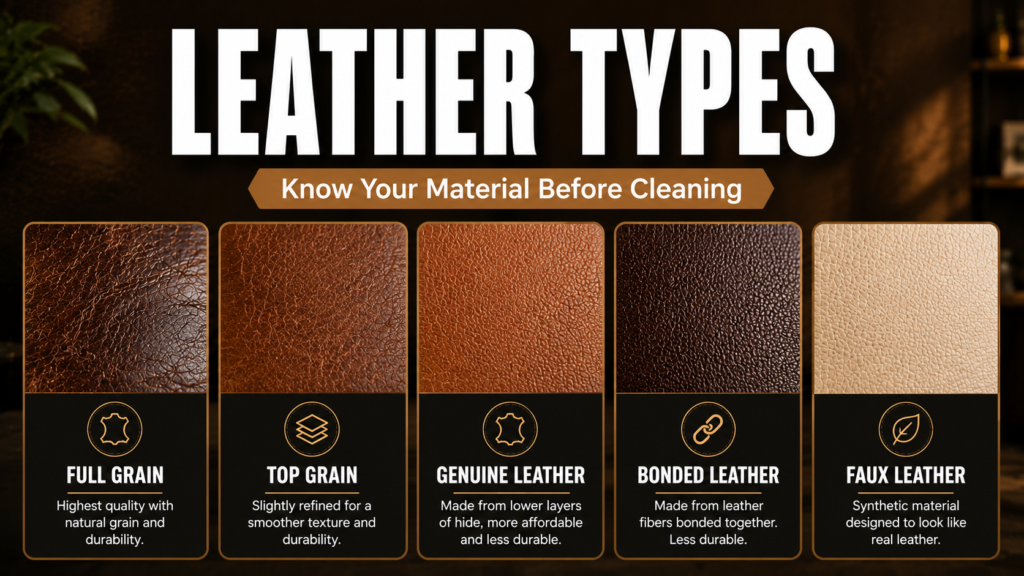
Full-Grain Leather
The highest-quality leather available. It retains the natural grain and develops a beautiful patina over time. Clean gently using pH-balanced leather products.
Top-Grain Leather
Top-grain leather has been lightly sanded for a smoother finish. It is durable, easier to maintain, and commonly used in premium furniture.
Genuine Leather
Although genuine leather is real leather, it is generally lower grade than full-grain or top-grain. Regular conditioning helps keep it from drying out.
Bonded Leather
Made from leather fibers mixed with synthetic materials. It is less durable and should never be soaked with water.
Faux Leather
Many sofas look like genuine leather but are actually made from polyurethane (PU) or PVC. Faux leather can often tolerate mild soap and water better than natural leather, but always check the manufacturer’s care instructions before cleaning.
Pro Tip: Check the care label or manufacturer’s manual if you’re unsure whether your couch is genuine or faux leather.
How Often Should You Clean a Leather Couch?
A simple cleaning schedule helps prevent long-term damage.
- Dust once every week
- Vacuum every two to four weeks
- Wipe with a slightly damp microfiber cloth once a month
- Deep clean every three to six months
- Apply leather conditioner every six to twelve months
Homes with children, pets, or heavy daily use may require more frequent cleaning.
Cleaning Supplies You’ll Need
Gather these items before you begin:
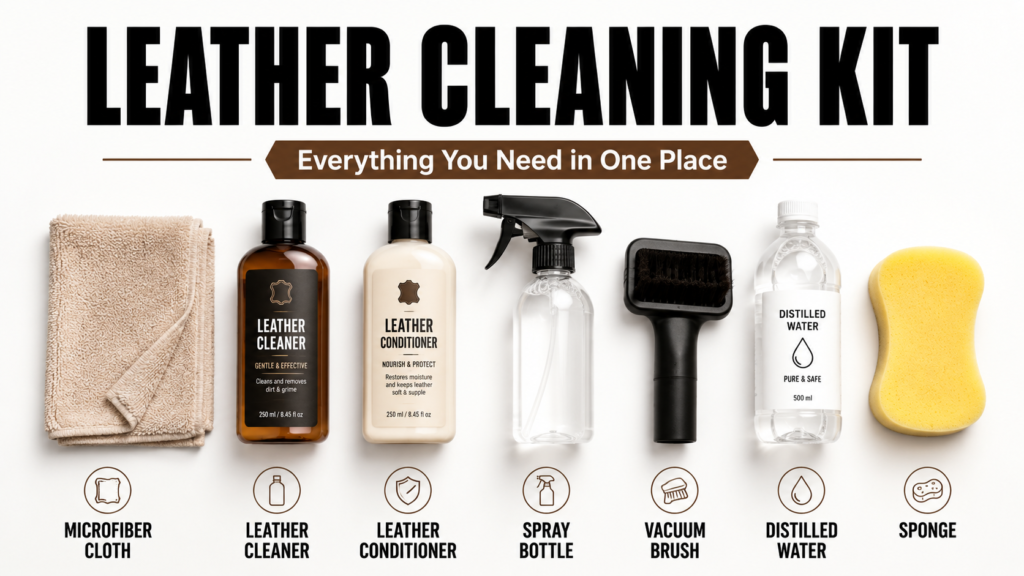
- Microfiber cloths
- Soft-bristle vacuum attachment
- Distilled water
- Mild fragrance-free soap
- pH-balanced leather cleaner
- Leather conditioner
- Soft sponge
- Spray bottle
- Cotton swabs for tight spaces
Using the proper tools reduces the risk of scratching or damaging the leather.
Cleaning Products You Should Never Use
Many household cleaners permanently damage leather by stripping away its natural oils.
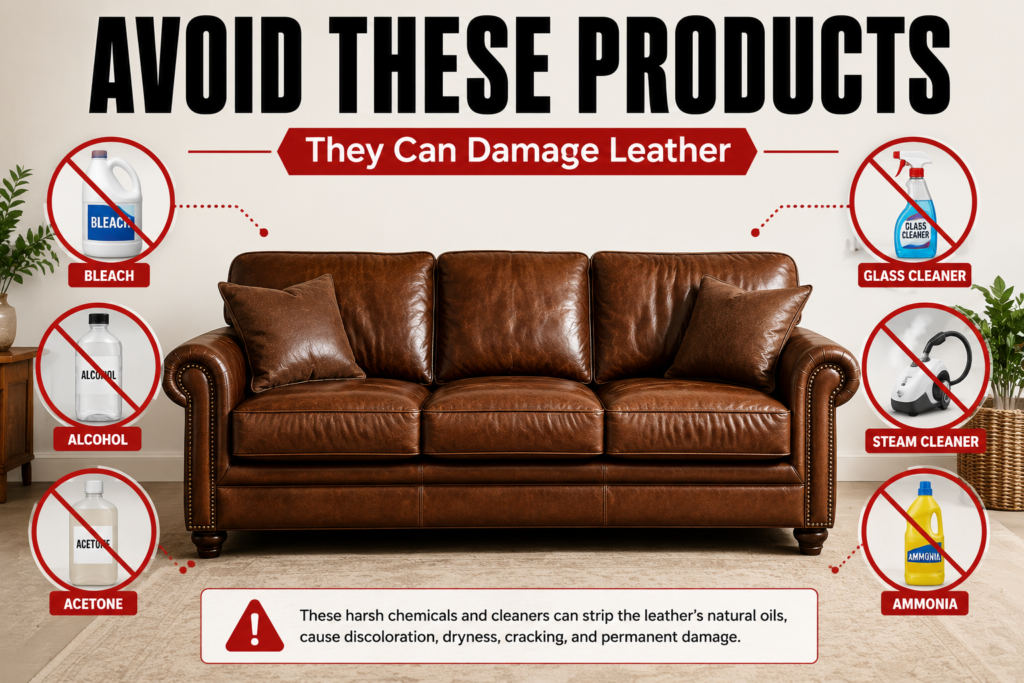
Avoid:
- Bleach
- Ammonia
- Acetone
- Alcohol-based cleaners
- Furniture polish
- Glass cleaner
- Steam cleaners
- Abrasive scrubbing pads
- Strong disinfectants
- Baby wipes containing alcohol
- Excess vinegar or lemon juice
Harsh chemicals can cause fading, discoloration, stiffness, and cracking.
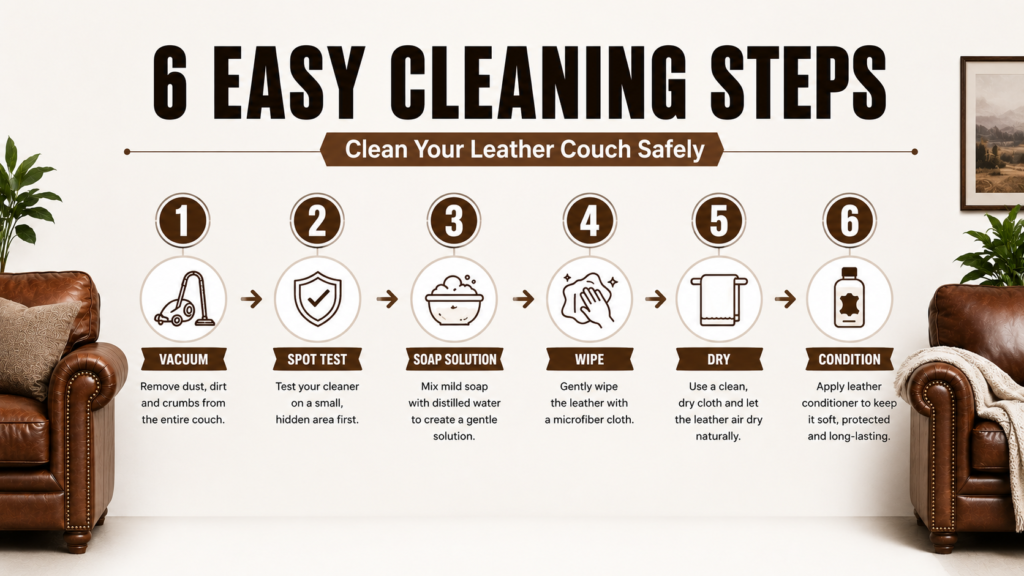
Step 1: Vacuum the Entire Couch
Always begin by vacuuming.
Use a soft brush attachment rather than a hard plastic nozzle, which can scratch leather.
Vacuum:
- Seat cushions
- Armrests
- Back cushions
- Under cushions
- Seams
- Creases
- Around piping
Removing dust first prevents dirt particles from rubbing into the leather while cleaning.
Step 2: Wipe Away Surface Dirt
- Lightly dampen a microfiber cloth with distilled water.
- The cloth should be damp—not wet.
- Gently wipe the leather using circular motions. Avoid scrubbing aggressively, as this may damage the protective finish.
Step 3: Make a Safe Leather Cleaning Solution
For routine cleaning, combine:
- 2 cups distilled water
- A few drops of mild fragrance-free soap
Mix gently.
Never soak the leather.
Step 4: Spot Test First
Always test any cleaner on a hidden area behind the couch or underneath a cushion.
Wait several minutes to check for:
- Color changes
- Fading
- Texture changes
Only proceed if no damage occurs.
Step 5: Clean the Entire Surface
Work one section at a time.
- Wipe gently with the damp microfiber cloth.
- Immediately dry with another clean cloth.
- Never allow water to sit on the leather.
- Avoid over-saturating seams and stitching.
Step 6: Remove Common Leather Couch Stains
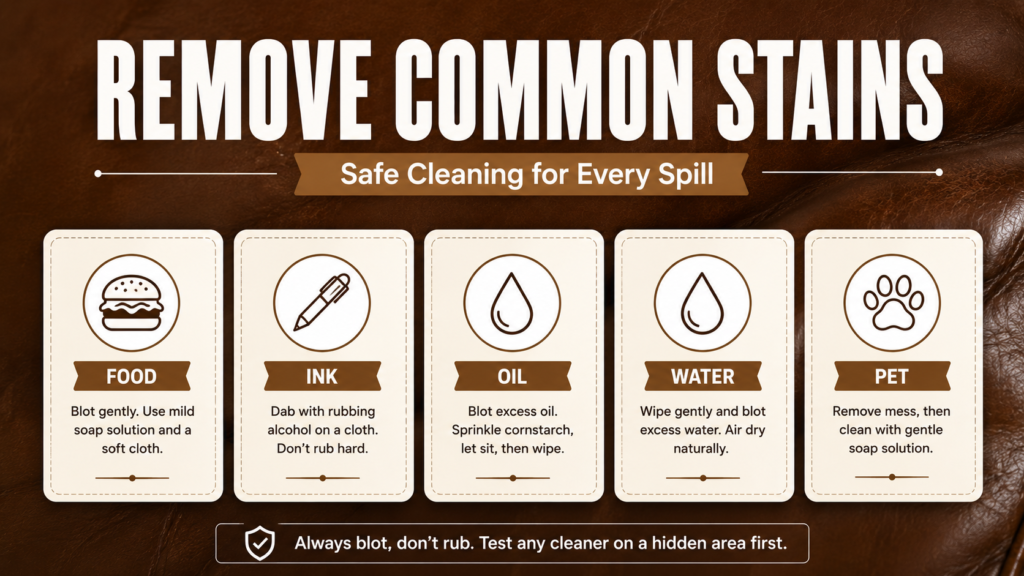
Food Stains
- Blot spills immediately using a clean microfiber cloth.
- Never rub the stain, as rubbing pushes food deeper into the leather grain.
- Clean gently with diluted mild soap.
Ink Stains
- Ink should be treated immediately.
- Use a leather-safe ink remover according to the product instructions.
- For large ink stains, professional cleaning is usually the safest option.
Grease and Oil Stains
Do not use water.
Instead:
- Blot excess grease.
- Sprinkle cornstarch or baking soda over the stain.
- Leave it overnight.
- Brush away the powder the next day.
The powder naturally absorbs excess oil.
Water Spots
- Small water marks often disappear as moisture evaporates naturally.
- Avoid using hair dryers or direct heat to speed up drying.
Pet Stains
- Clean accidents immediately.
- Blot moisture with a clean cloth before using a leather-safe cleaner.
- Once dry, apply leather conditioner to restore moisture.
Dry the Leather Properly
After cleaning, allow the leather to air dry naturally.
Never use:
- Hair dryers
- Space heaters
- Direct sunlight
- Heat guns
Rapid drying removes natural oils and can cause cracking.
Condition the Leather
Conditioning is one of the most overlooked yet important parts of leather care.
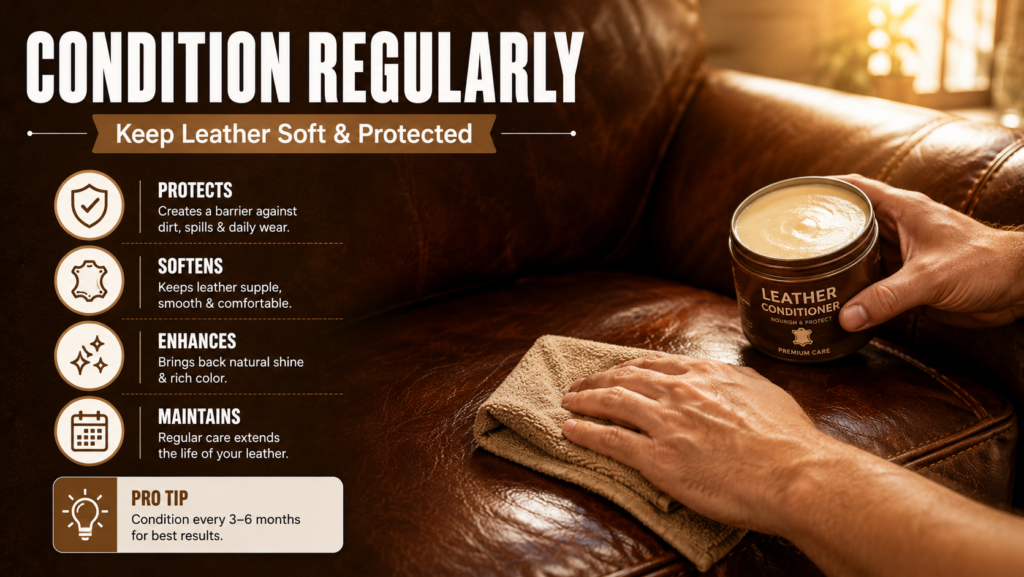
A quality leather conditioner:
- Restores natural oils
- Prevents cracking
- Keeps leather soft
- Improves flexibility
- Enhances appearance
Apply a small amount using a clean microfiber cloth.Massage into the leather using gentle circular motions.Allow the conditioner to absorb before buffing with another clean cloth.For best results, choose a high-quality wax-based or pH-balanced leather conditioner recommended by the furniture manufacturer.
DIY Leather Cleaning Solutions
Simple homemade solutions can be effective for light cleaning.
Examples include:
- Distilled water with mild soap
- Cornstarch for grease stains
- Baking soda placed nearby to absorb odors
Avoid relying on strong DIY recipes containing vinegar, lemon juice, or rubbing alcohol, as they may damage certain leather finishes.
Should You Buy Commercial Leather Cleaners?
Yes—especially for expensive leather furniture.
Leather-specific cleaners are designed to:
- Maintain proper pH
- Protect natural oils
- Remove dirt safely
- Preserve protective coatings
Always read and follow the manufacturer’s instructions. Before applying any commercial cleaner, test it on an inconspicuous area of the couch.
Common Leather Cleaning Mistakes
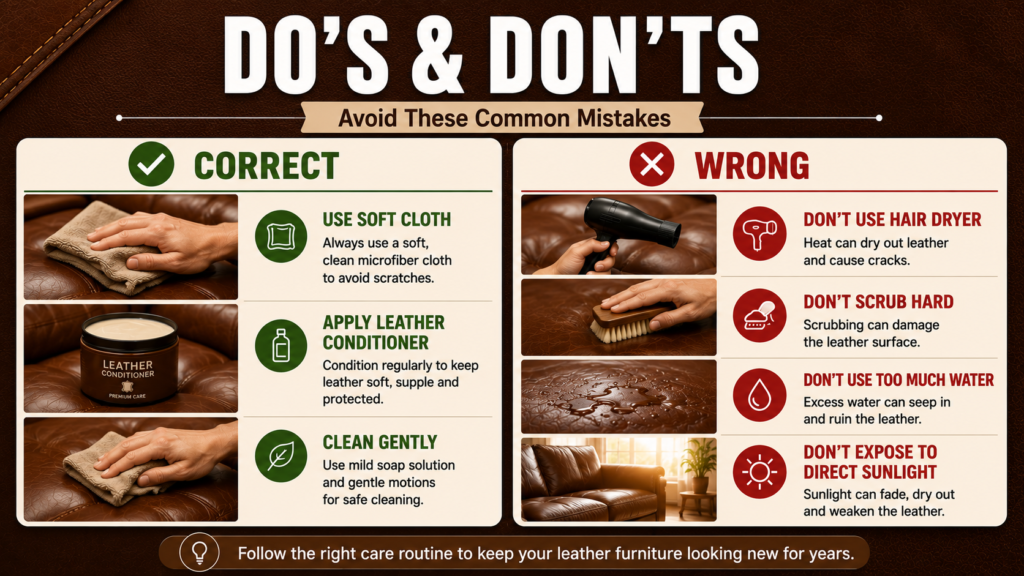
Avoid these mistakes:
- Using too much water
- Scrubbing aggressively
- Skipping conditioner
- Using household cleaning sprays
- Leaving spills unattended
- Using hard vacuum attachments
- Drying leather in direct sunlight
- Ignoring regular maintenance
Small mistakes repeated over time often cause more damage than accidental spills.
How to Remove Odors from a Leather Couch?
Leather may absorb odors from pets, smoke, food, or humidity.
To freshen it:
- Clean the surface thoroughly.
- Improve room ventilation.
- Place an open bowl of baking soda nearby to absorb odors.
- Use a leather-safe odor neutralizer if necessary.
Avoid heavily perfumed sprays, which may leave residue on the leather.
Prevent Future Damage
Protect your leather furniture by following these habits:
- Keep it out of direct sunlight.
- Maintain indoor humidity between 40% and 60%.
- Wipe spills immediately.
- Rotate removable cushions.
- Keep sharp objects away.
- Trim pet nails regularly.
- Dust weekly.
- Vacuum regularly.
Consistent maintenance is the easiest way to preserve your couch’s appearance.
Seasonal Leather Care Tips
Summer
Protect leather from prolonged UV exposure and high humidity.
Winter
Indoor heating can dry out leather, making conditioning more important.
Spring & Fall
Perform a deep clean, inspect stitching, and check for fading or minor damage.
How to Remove Mold and Mildew
If mold develops:
- Move the couch to a well-ventilated area.
- Wear gloves.
- Gently remove visible mold with a slightly damp microfiber cloth.
- Clean using a leather-safe cleaner.
- Allow the leather to dry naturally.
For severe mold growth, consult a professional leather cleaning service.
When Should You Call a Professional?
Professional leather cleaning is recommended for:
- Large ink stains
- Heavy grease buildup
- Extensive mold
- Deep cracks
- Antique leather furniture
- Valuable designer sofas
- Severe discoloration
Experts have specialized products and techniques that minimize the risk of permanent damage.
Frequently Asked Questions
Can I clean a leather couch with dish soap?
Yes, but only occasionally. Use a few drops of mild, fragrance-free dish soap mixed with distilled water. Avoid strong detergents.
Can vinegar clean leather?
Some DIY guides recommend diluted vinegar, but it may damage certain finishes. A pH-balanced leather cleaner is the safer option.
How often should I condition leather?
Every six to twelve months, or more often if your home has very dry indoor air.
Is steam cleaning safe?
No. Steam introduces excessive heat and moisture, which can damage leather.
Can I use baby wipes?
No. Many baby wipes contain alcohol or chemicals that can dry out and discolor leather.
Final Thoughts

Cleaning a leather couch is simple when you use the right methods. Regular dusting, gentle cleaning, prompt spill removal, and routine conditioning will help preserve the leather’s natural beauty, softness, and durability.Whether you own a luxury leather sofa, sectional, recliner, loveseat, or armchair, following these maintenance practices will keep your furniture looking elegant for many years. A little preventative care today can save you from costly repairs tomorrow while allowing your leather to age gracefully and develop the rich character that makes genuine leather so highly valued.