How to Build a Capsule Wardrobe Plan: The Ultimate Step-by-Step Guide
Introduction to Capsule Wardrobes
Opening your closet should feel inspiring—not overwhelming. Yet many people stand in front of wardrobes overflowing with clothing while feeling like they have absolutely nothing to wear. This contradiction has become increasingly common in today’s fashion landscape, where fast-changing trends encourage excessive purchasing without improving everyday style.
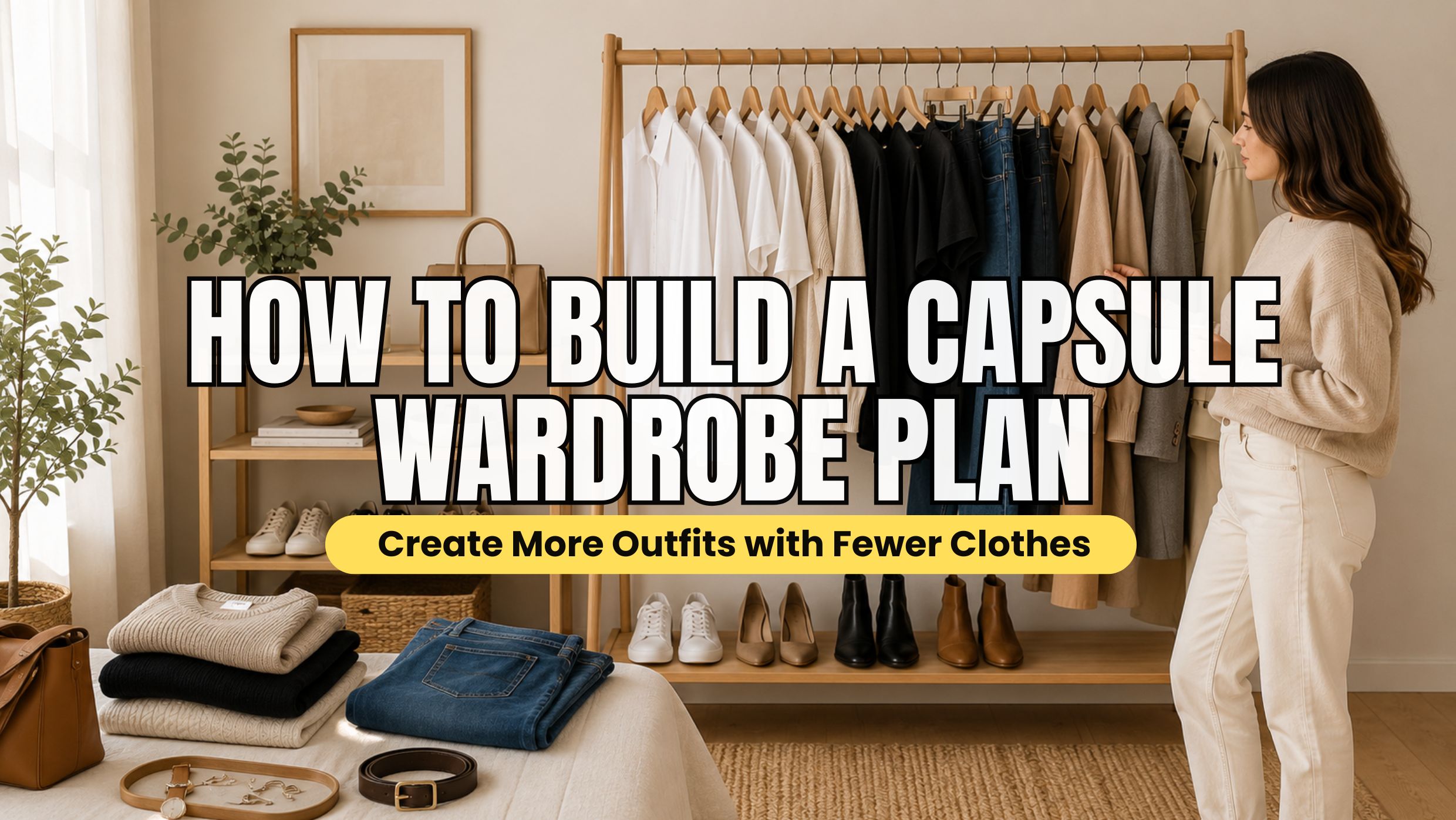
A capsule wardrobe offers an elegant solution. Instead of owning hundreds of garments that rarely get worn, you build a carefully curated collection of versatile, high-quality pieces that effortlessly work together. Every item serves a purpose. Every purchase is intentional.
Whether you’re simplifying your lifestyle, saving money, traveling frequently, or simply tired of decision fatigue, learning how to build a capsule wardrobe plan can completely transform your relationship with clothing.
This comprehensive guide walks through every step—from understanding your personal style to maintaining a wardrobe you’ll genuinely love wearing every day.
What Is a Capsule Wardrobe?
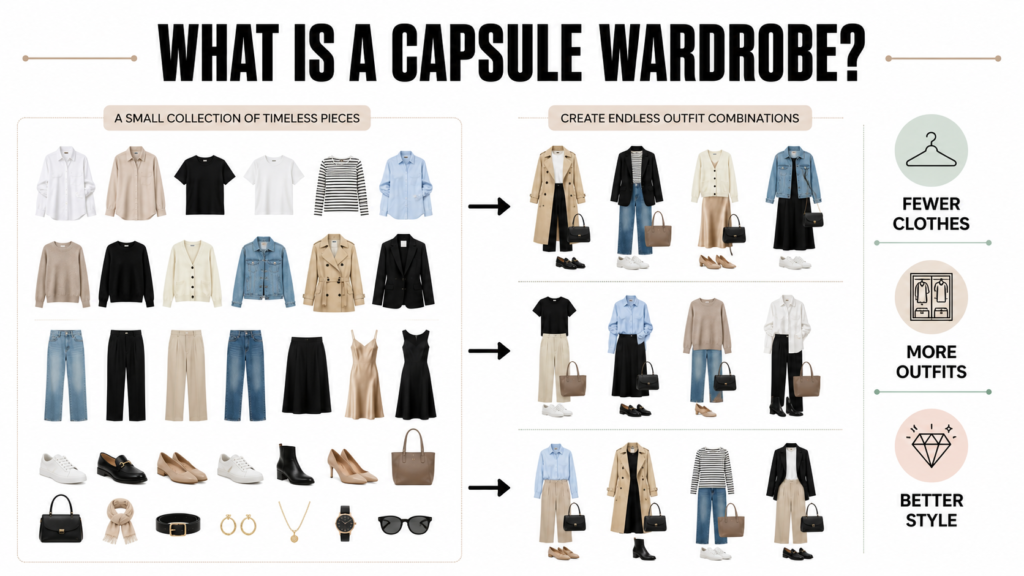
A capsule wardrobe is a thoughtfully selected collection of clothing that can be mixed and matched to create dozens—or even hundreds—of outfit combinations.
Unlike traditional wardrobes that rely on quantity, capsule wardrobes prioritize versatility.
A typical capsule wardrobe may contain between 30 and 50 carefully chosen pieces, although the exact number varies depending on individual needs. These usually include:
- Shirts
- T-shirts
- Sweaters
- Pants
- Jeans
- Skirts
- Dresses
- Jackets
- Shoes
- Accessories
The focus isn’t on owning less simply for the sake of minimalism. It’s about owning better.
The History Behind the Capsule Wardrobe Concept
The capsule wardrobe concept dates back to the 1970s when London boutique owner Susie Faux introduced the idea of creating wardrobes built around timeless essentials.
Later, designer Donna Karan popularized the philosophy with her famous “Seven Easy Pieces” collection, demonstrating how a limited number of garments could create countless sophisticated looks.
Today, capsule wardrobes have evolved beyond fashion. They represent mindful consumption, sustainability, and intentional living.
Why More People Are Choosing Capsule Wardrobes
Modern consumers face an endless stream of advertisements, influencer recommendations, and seasonal fashion trends.
As a result, closets become cluttered while satisfaction decreases.
Capsule wardrobes help people:
- Save time
- Reduce stress
- Spend less money
- Shop intentionally
- Minimize waste
- Simplify mornings
- Develop personal style
- Travel more easily
Rather than chasing every trend, capsule wardrobe enthusiasts focus on pieces they truly enjoy wearing.
Benefits of Building a Capsule Wardrobe Plan
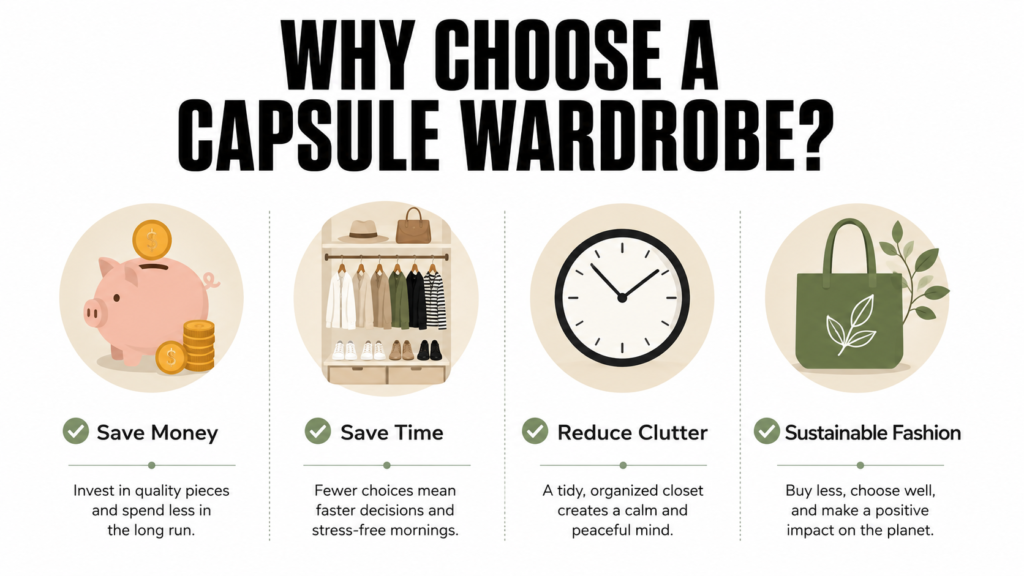
Less Decision Fatigue
Choosing outfits becomes almost effortless.
Since every piece coordinates with the rest of the wardrobe, getting dressed takes only minutes.
Better Financial Decisions
Impulse shopping often leads to wasted money.
A capsule wardrobe encourages thoughtful purchasing, helping you invest in garments you’ll wear repeatedly.
Over time, many people spend less while enjoying higher-quality clothing.
More Closet Space
Decluttering creates physical and mental breathing room.
Your wardrobe becomes organized, accessible, and easier to maintain.
Sustainable Fashion Choices
Buying fewer clothes reduces textile waste and lowers environmental impact.
Quality garments generally last longer, reducing the need for constant replacements.
Stronger Personal Style
Instead of copying trends, you build a wardrobe that genuinely reflects your personality.
Confidence naturally follows.
Common Myths About Capsule Wardrobes
Many misconceptions discourage people from trying capsule wardrobes.
Myth 1: You Can Only Own 30 Items
There are no universal rules.
Some people thrive with 25 pieces.
Others need 60.
The ideal number depends on lifestyle.
Myth 2: Capsule Wardrobes Are Boring
Quite the opposite.
A well-designed capsule wardrobe encourages creativity because every item works with multiple others.
Myth 3: You Must Wear Neutral Colors
Neutral colors help with versatility, but colorful wardrobes work perfectly when built around cohesive palettes.
Myth 4: You Can’t Follow Trends
You absolutely can.
Simply incorporate trends selectively instead of allowing them to dominate your wardrobe.
Understanding Your Personal Style
Before removing a single garment, identify what you genuinely enjoy wearing.
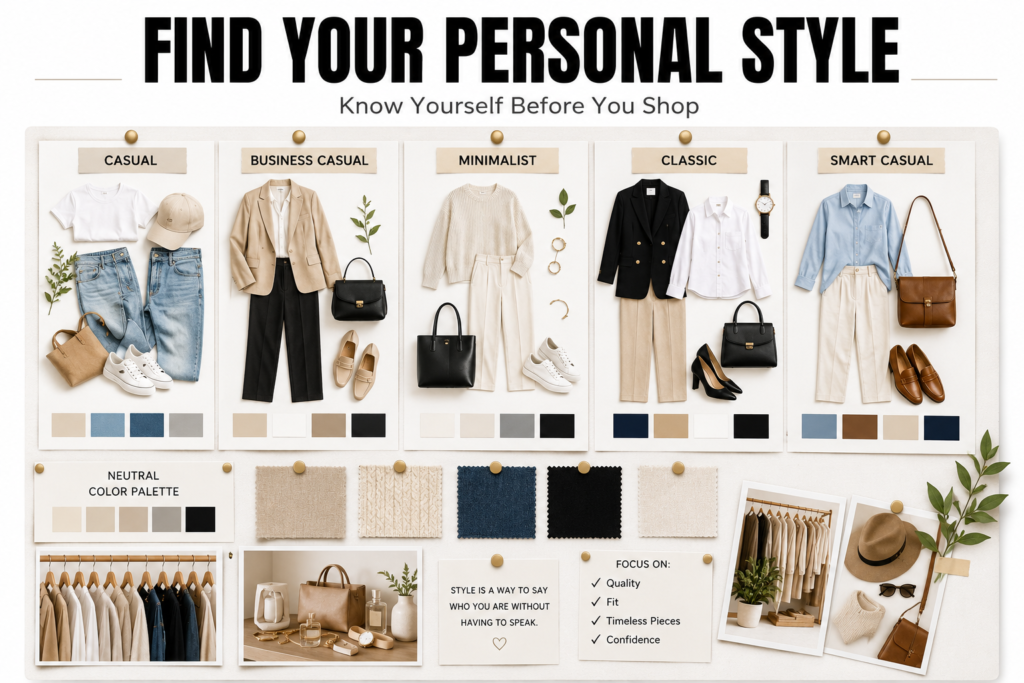
Ask yourself:
- What outfits make you feel confident?
- Which colors flatter your complexion?
- Which fabrics feel comfortable?
- Which clothes receive compliments?
- Which items do you wear repeatedly?
Creating a Pinterest board or saving outfit inspiration can reveal recurring patterns that define your aesthetic.
Assessing Your Lifestyle and Daily Needs
Your wardrobe should support your actual lifestyle—not an imaginary one.
Consider how you spend most days.
Do you:
- Work in an office?
- Work remotely?
- Attend formal events?
- Travel frequently?
- Exercise regularly?
- Care for young children?
Someone working from home will require very different clothing than someone in a corporate office.
Your capsule wardrobe should reflect reality.
Setting Goals Before You Start
Clear goals make decision-making easier.
Possible objectives include:
- Reducing clutter
- Saving money
- Dressing more professionally
- Packing lighter for travel
- Buying sustainable clothing
- Improving confidence
Knowing your “why” keeps your wardrobe focused.
Decluttering Your Existing Closet
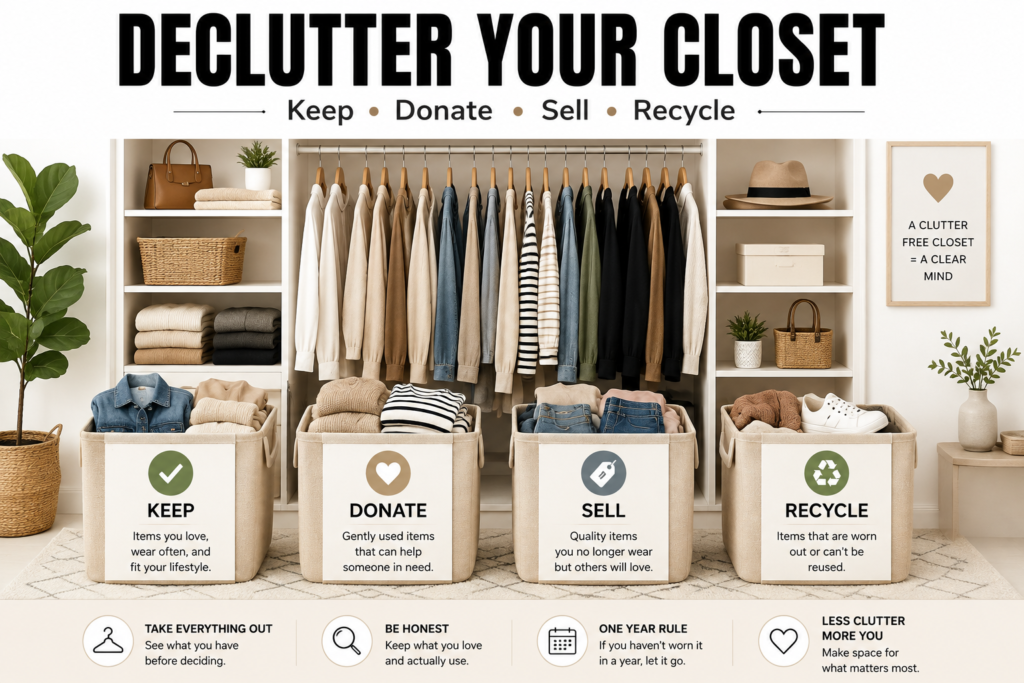
Empty everything.
Yes—everything.
Sort clothing into categories:
- Keep
- Donate
- Sell
- Repair
- Recycle
Handling every item individually forces honest decisions.
If you forgot you owned it, chances are you don’t need it.
How to Decide What to Keep
Keep clothing that:
- Fits comfortably
- Matches your lifestyle
- Coordinates with other items
- Is in good condition
- Makes you feel confident
Remove pieces that are:
- Damaged beyond repair
- Poorly fitting
- Rarely worn
- Trend-driven with little versatility
- Duplicate items without purpose
A curated wardrobe always outperforms an overcrowded one.
Choosing a Color Palette
Color harmony forms the foundation of every successful capsule wardrobe.
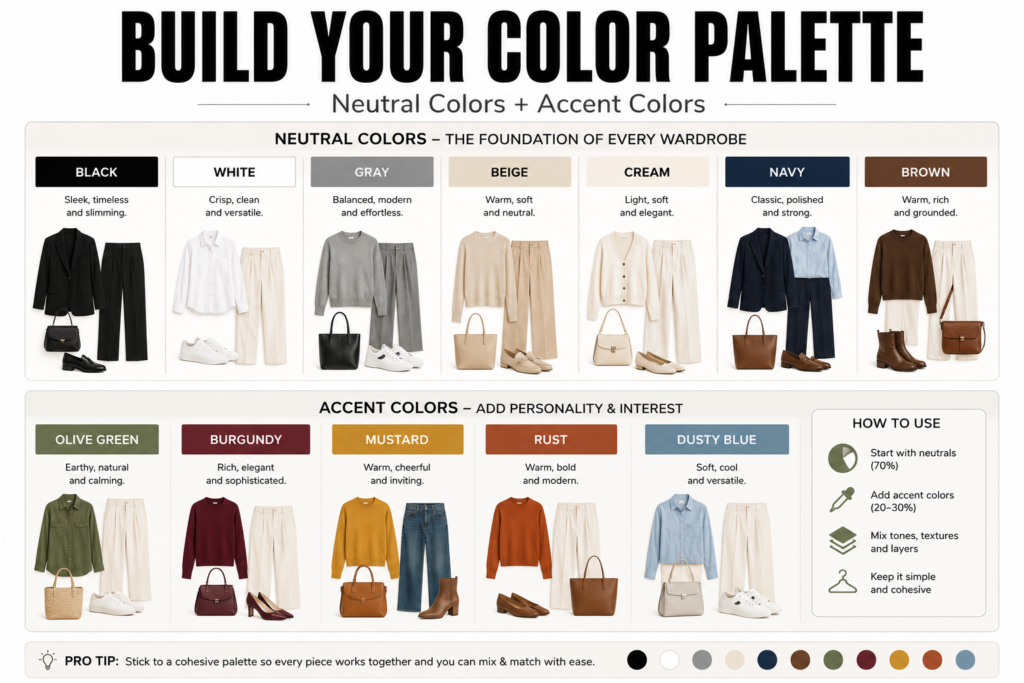
A balanced palette usually includes:
Neutral Colors
- Black
- White
- Gray
- Navy
- Beige
- Cream
- Brown
Accent Colors
Choose two to four colors you genuinely enjoy.
Examples include:
- Olive
- Burgundy
- Forest green
- Dusty blue
- Mustard
- Rust
Sticking to complementary colors ensures maximum outfit combinations.
Selecting Essential Clothing Categories
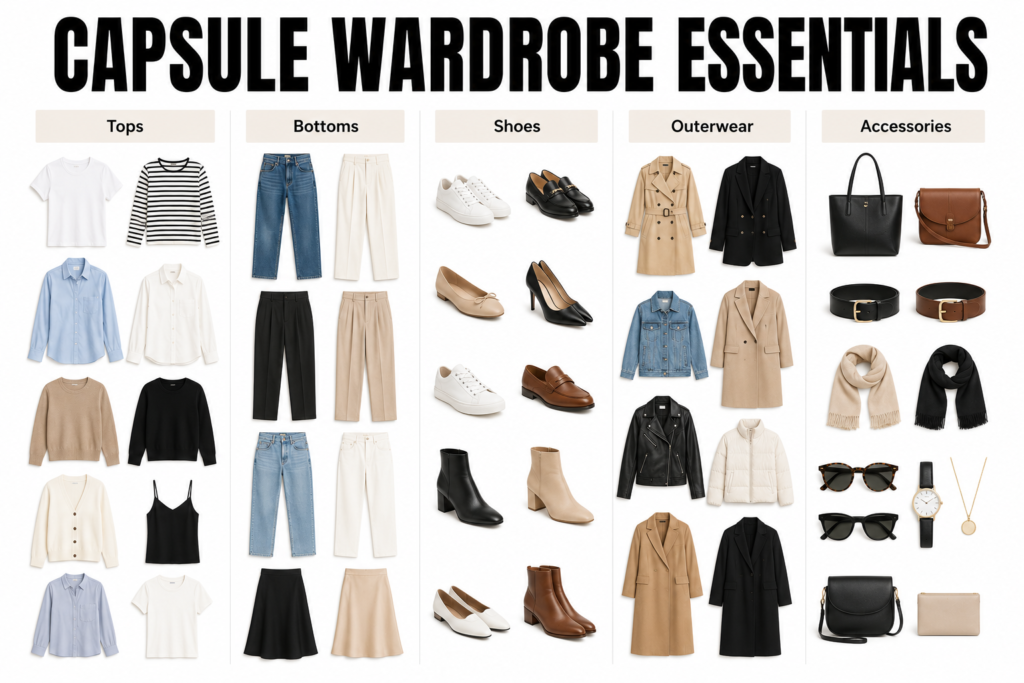
A balanced wardrobe includes:
- Casual tops
- Dress shirts
- Jeans
- Trousers
- Shorts
- Skirts
- Dresses
- Blazers
- Sweaters
- Jackets
- Coats
- Sneakers
- Boots
- Dress shoes
- Sandals
- Accessories
The exact mix depends on climate and lifestyle.
Must-Have Tops for Every Capsule Wardrobe
Tops are the backbone of daily outfits.
Consider including:
- Plain white T-shirt
- Black T-shirt
- Neutral long-sleeve shirt
- Oxford button-down
- Lightweight knit sweater
- Cardigan
- Casual blouse
- Dress shirt
Aim for pieces that layer easily throughout the year.
Building the Perfect Bottom Collection
Quality bottoms provide structure for countless outfits.
Examples include:
- Dark jeans
- Light jeans
- Black trousers
- Chinos
- Tailored shorts
- Midi skirt
- Pencil skirt
Fit matters more than quantity.
A perfectly tailored pair of trousers will outperform several ill-fitting alternatives.
Choosing Dresses, Skirts, and One-Piece Outfits
For those who enjoy dresses, select versatile silhouettes suitable for multiple occasions.
A simple black dress, wrap dress, or shirt dress can transition from daytime errands to evening dinners with a change of shoes and accessories.
Selecting Outerwear That Lasts
Outerwear often receives heavy use, making quality especially important.
Consider investing in:
- Trench coat
- Denim jacket
- Leather jacket
- Wool coat
- Blazer
- Puffer jacket
Choose timeless cuts over fleeting trends.
Picking the Right Shoes
Shoes should balance comfort, durability, and style.
A practical collection might include:
- White sneakers
- Black loafers
- Ankle boots
- Athletic shoes
- Sandals
- Formal shoes
Each pair should serve multiple outfits whenever possible.
Accessories That Maximize Outfit Options
Accessories create variety without expanding your wardrobe significantly.
Useful additions include:
- Leather belt
- Watch
- Crossbody bag
- Tote bag
- Scarf
- Sunglasses
- Minimal jewelry
Small details often make the biggest difference.
Choosing Quality Over Quantity
High-quality clothing usually lasts longer, fits better, and maintains its appearance through repeated wear.
When evaluating garments, inspect:
- Fabric composition
- Stitching
- Buttons
- Zippers
- Seams
- Construction quality
Natural fibers like cotton, linen, wool, silk, and quality leather often provide superior longevity when properly cared for.
Seasonal Capsule Wardrobe Planning
Different seasons require different clothing, but the underlying philosophy remains the same.
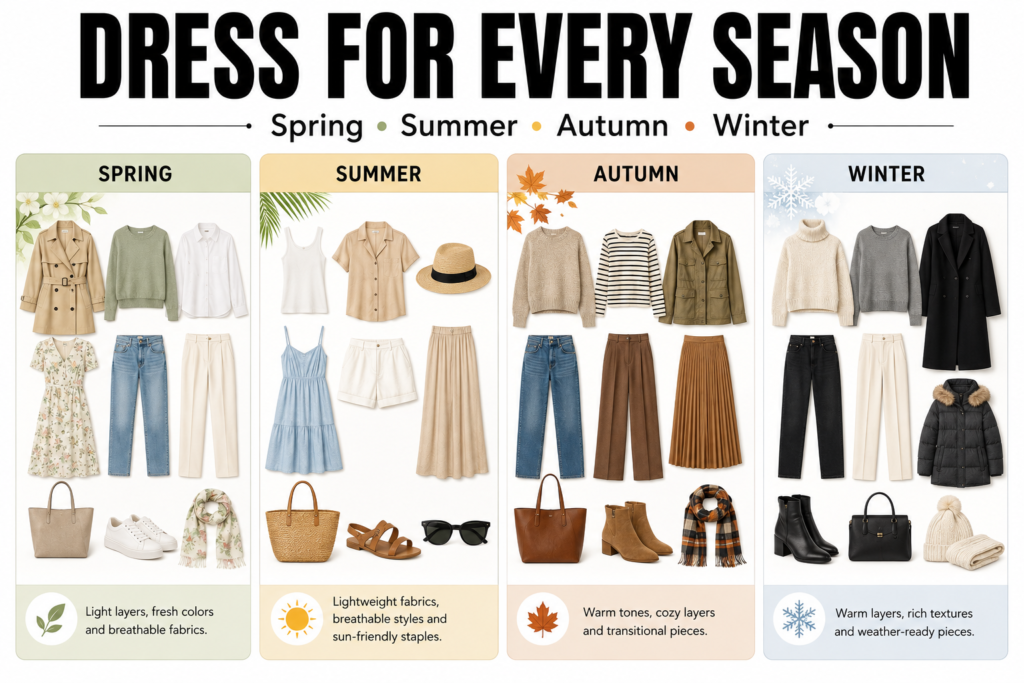
Spring
Light layers, breathable fabrics, waterproof jackets.
Summer
Linen shirts, cotton dresses, shorts, sandals.
Autumn
Sweaters, denim jackets, ankle boots.
Winter
Coats, knitwear, thermal layers, leather boots.
Store off-season clothing neatly to reduce closet clutter.
Creating Outfit Combinations
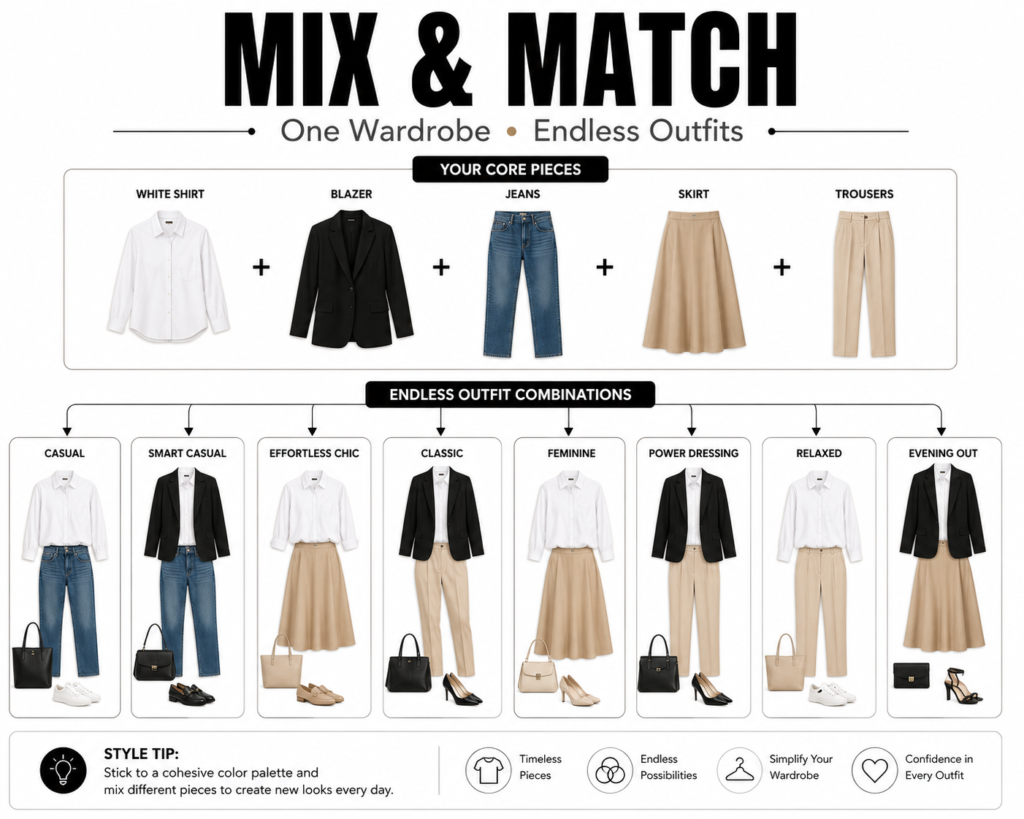
One of the greatest strengths of a capsule wardrobe is versatility.
For example:
- White shirt + dark jeans + loafers
- Black sweater + tailored trousers + blazer
- Denim jacket + T-shirt + chinos + sneakers
- Wrap dress + cardigan + ankle boots
By combining a relatively small number of garments, you can create dozens of polished outfits suitable for work, casual outings, travel, or social events.
Smart Shopping Tips for Capsule Wardrobes
Before buying anything, ask yourself:
- Does it match at least three existing items?
- Can I wear it in multiple seasons?
- Will I still enjoy wearing it next year?
- Is it replacing something worn out?
- Is the quality worth the price?
Avoid shopping emotionally or impulsively.
Waiting 24 to 48 hours before purchasing non-essential items can help prevent unnecessary spending.
Avoiding Common Capsule Wardrobe Mistakes
Many beginners make avoidable mistakes.
Common ones include:
- Buying everything at once
- Following trends without purpose
- Ignoring comfort
- Keeping clothes out of guilt
- Choosing poor-quality basics
- Forgetting lifestyle needs
- Purchasing duplicates unnecessarily
A capsule wardrobe evolves gradually. There is no need to rush the process.
Maintaining and Refreshing Your Capsule Wardrobe
Maintenance is simple when your wardrobe is intentional.
Every few months:
- Review what you actually wear.
- Repair damaged favorites.
- Donate unused pieces.
- Replace worn essentials.
- Adjust for seasonal needs.
Keeping a running wish list also helps you avoid impulse purchases and focus on meaningful additions.
Capsule Wardrobe Examples
Office Professional
- Blazer
- Dress shirts
- Trousers
- Pencil skirts
- Loafers
- Pumps
- Structured tote
Remote Worker
- Comfortable knitwear
- Well-fitting jeans
- Casual shirts
- Cardigans
- Clean sneakers
Frequent Traveler
- Wrinkle-resistant clothing
- Neutral layers
- Comfortable walking shoes
- Lightweight jacket
- Versatile accessories
These examples illustrate how the same principles can be adapted to different lifestyles.
Frequently Asked Questions
How many clothes should a capsule wardrobe have?
There is no universal number. Most people find that 30 to 50 versatile pieces work well, but your ideal size depends on your lifestyle, climate, and personal preferences.
Can I include trendy items?
Yes. Add a few trend-focused pieces each season if they complement your existing wardrobe rather than replacing your timeless staples.
Is a capsule wardrobe expensive?
Not necessarily. While investing in quality basics can cost more upfront, many people spend less over time because they buy fewer, more durable garments.
What if my style changes?
A capsule wardrobe is meant to evolve. Reassess your collection periodically and adjust it to reflect your current needs and tastes.
Can capsule wardrobes work for families?
Absolutely. The same principles of thoughtful purchasing, versatility, and organization can simplify wardrobes for children and adults alike.
Final Thoughts
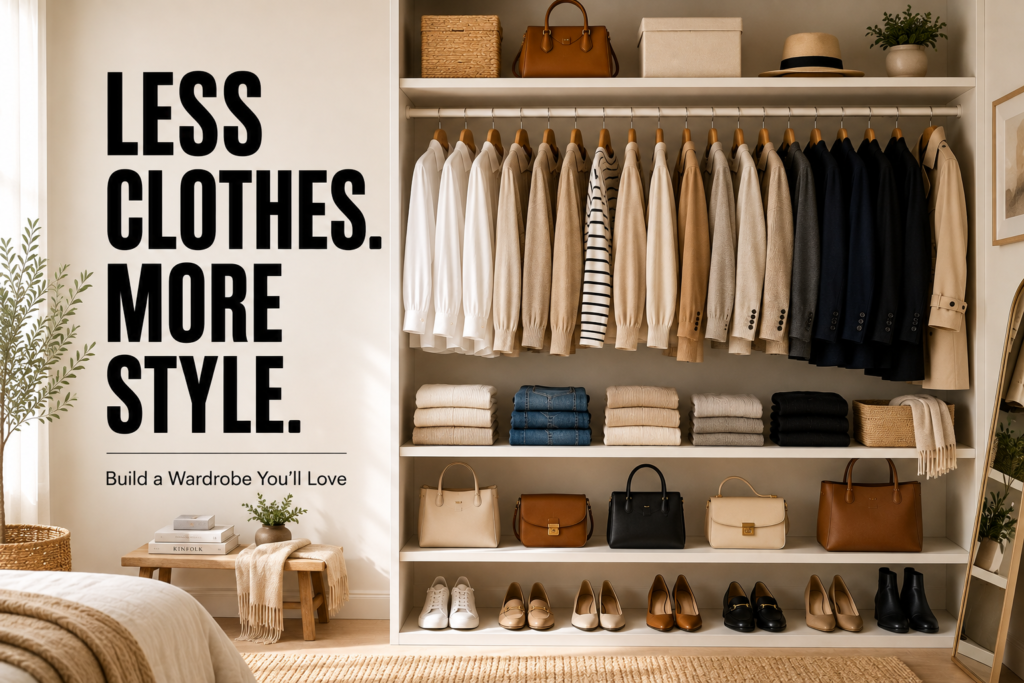
Building a capsule wardrobe plan is about far more than reducing the number of clothes you own. It is a practical approach to simplifying daily life, refining personal style, and making thoughtful purchasing decisions.
By understanding your lifestyle, defining a cohesive color palette, investing in versatile, well-made pieces, and maintaining your collection over time, you can create a wardrobe that works harder for you with less effort. The result is a closet filled with clothing you genuinely enjoy wearing, outfits that come together with ease, and a shopping habit guided by intention rather than impulse.
A capsule wardrobe is not about restriction—it is about freedom. When every piece has a purpose and every outfit feels authentic, getting dressed becomes one less thing to worry about and one more opportunity to express your confidence with simplicity and style.