7 Tips to Buying Your First Leather Jacket: A Complete Beginner’s Guide
A leather jacket is more than just another piece of outerwear, it’s a wardrobe investment that can stay with you for decades. Unlike fast-fashion items that lose their appeal after a season, a quality leather jacket develops character over time and becomes even more attractive with age. If you’re shopping for your first leather jacket, the number of styles, leather types, price ranges, and brands can quickly become overwhelming. Choosing the wrong one may leave you with a jacket that doesn’t fit well, feels uncomfortable, or doesn’t last as long as expected. This guide covers seven essential tips that will help you make a confident purchase, avoid common mistakes, and find a leather jacket you’ll enjoy wearing for years.
Why a Leather Jacket Is Worth the Investment
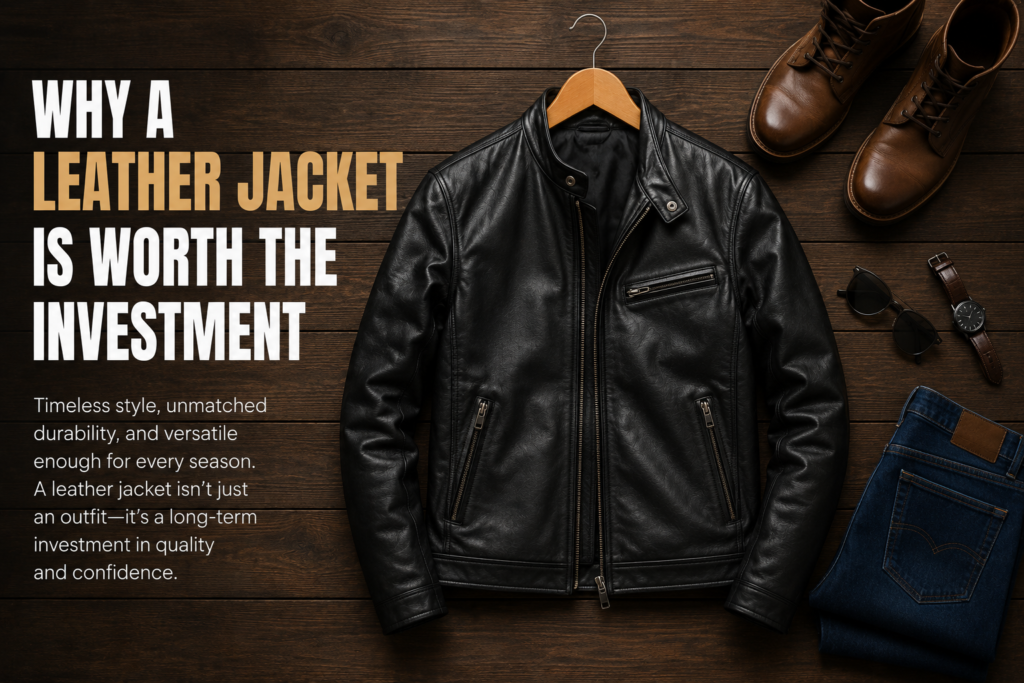
Few fashion pieces offer the same combination of durability, versatility, and timeless style as a leather jacket. Whether paired with jeans and sneakers or layered over a shirt and boots, it instantly elevates almost any outfit.
A well-crafted leather jacket can:
- Last 15–30 years with proper care
- Never go out of style
- Improve in appearance as it ages
- Be worn across multiple seasons
- Add value to your wardrobe instead of becoming disposable fashion
Instead of buying several inexpensive jackets over the years, investing in one quality leather jacket often proves to be the smarter long-term decision.
Tip 1: Learn the Different Types of Leather
The quality of the leather determines how your jacket will look, feel, and age. Understanding the different leather grades is the first step toward making an informed purchase.
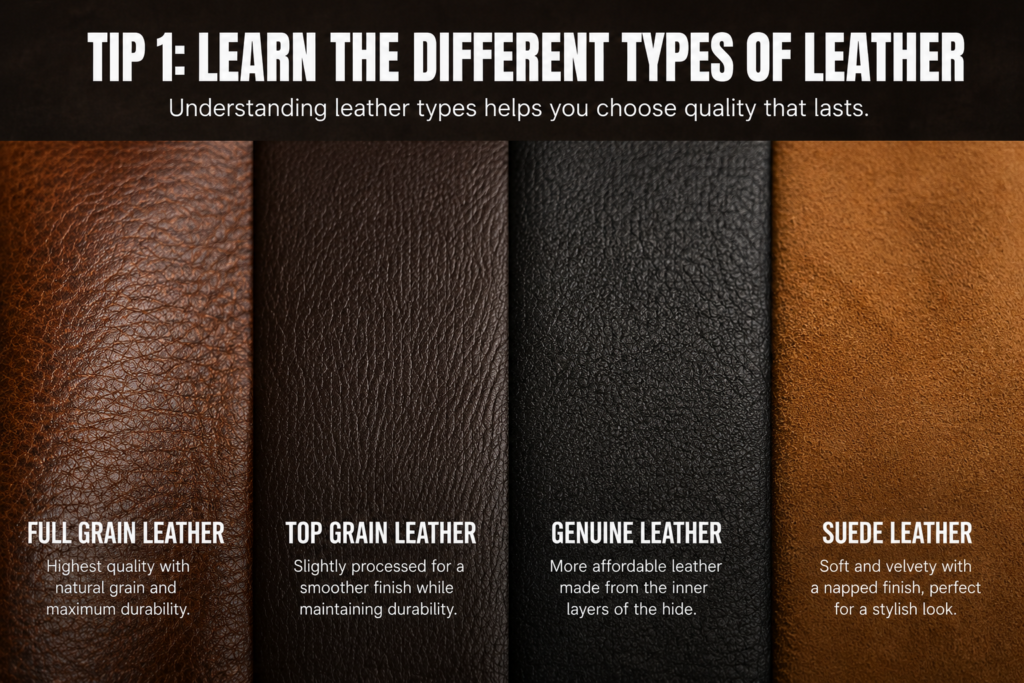
Full-Grain Leather
Full-grain leather is considered the finest quality available. It retains the natural surface of the hide, making it exceptionally strong and durable.
Benefits include:
- Outstanding durability
- Rich natural texture
- Beautiful aging process
- Unique patina over time
Although it typically costs more, full-grain leather offers the best long-term value.
Best for:
People looking for a lifetime investment.
Top-Grain Leather
Top-grain leather is slightly sanded to remove natural imperfections while preserving excellent strength.
Advantages include:
- Smooth appearance
- Softer texture
- Premium finish
- Easier maintenance
Many luxury fashion brands use top-grain leather because it combines elegance with durability.
Best for:
Buyers who want premium quality with a refined look.
Genuine Leather
Despite its name, genuine leather is generally a lower grade than full-grain or top-grain leather. It is still real leather but is made from the lower layers of the hide.
Pros:
- Affordable
- Attractive appearance
- Suitable for occasional wear
Cons:
- Less durable
- Ages faster
- Doesn’t develop the same rich patina
Suede and Nubuck
Suede and nubuck provide a softer, velvety finish that offers a different style compared to smooth leather.
They look luxurious but require extra care because they absorb moisture and stains more easily.
These materials are perfect if you prioritize texture and fashion over rugged durability.
Tip 2: Choose a Style That Fits Your Lifestyle
Not every leather jacket is designed for the same purpose. The best choice depends on how you plan to wear it.
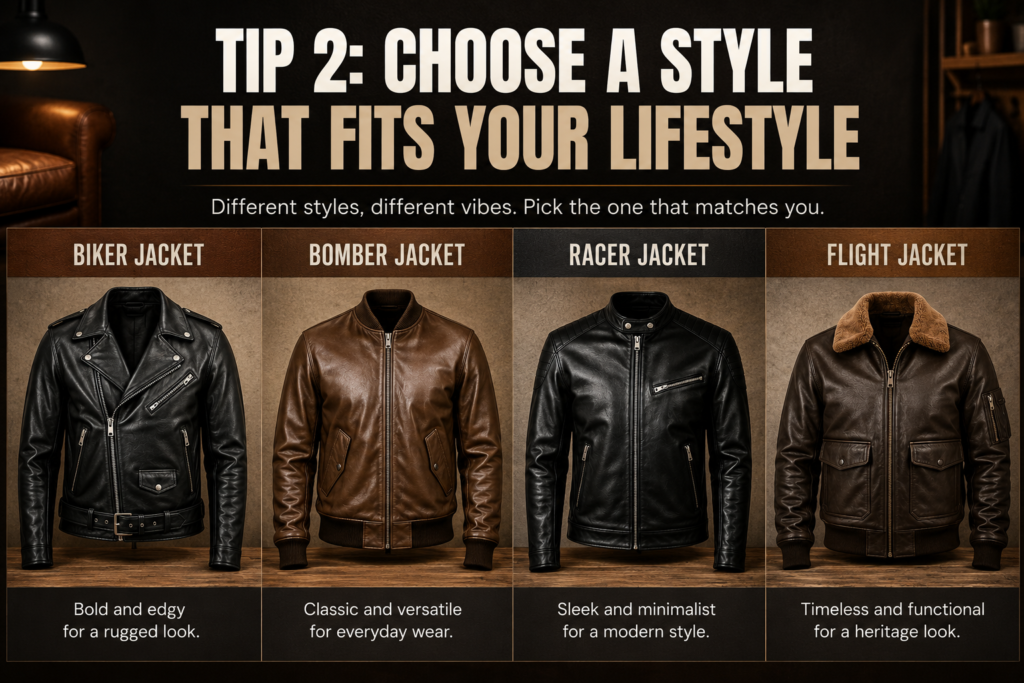
Biker Jacket
Recognizable by its asymmetrical zipper, wide lapels, and bold hardware, the biker jacket is iconic.
It pairs well with:
- Jeans
- Boots
- T-shirts
- Casual outfits
Ideal for those who enjoy a bold, confident style.
Bomber Jacket
Originally designed for military pilots, bomber jackets offer a relaxed fit with ribbed cuffs and waistbands.They’re comfortable enough for everyday wear and work with almost any casual wardrobe.
Racer Jacket
If simplicity is your preference, the racer jacket is an excellent option.Its clean lines and minimal detailing create a modern look suitable for both casual and smart-casual occasions.
Flight Jacket
Flight jackets feature heavier construction and often include shearling collars or insulated linings.They provide warmth while maintaining a timeless aviation-inspired appearance.
Tip 3: Prioritize Fit Over Brand Names
Even the highest-quality leather jacket won’t look good if it doesn’t fit properly.
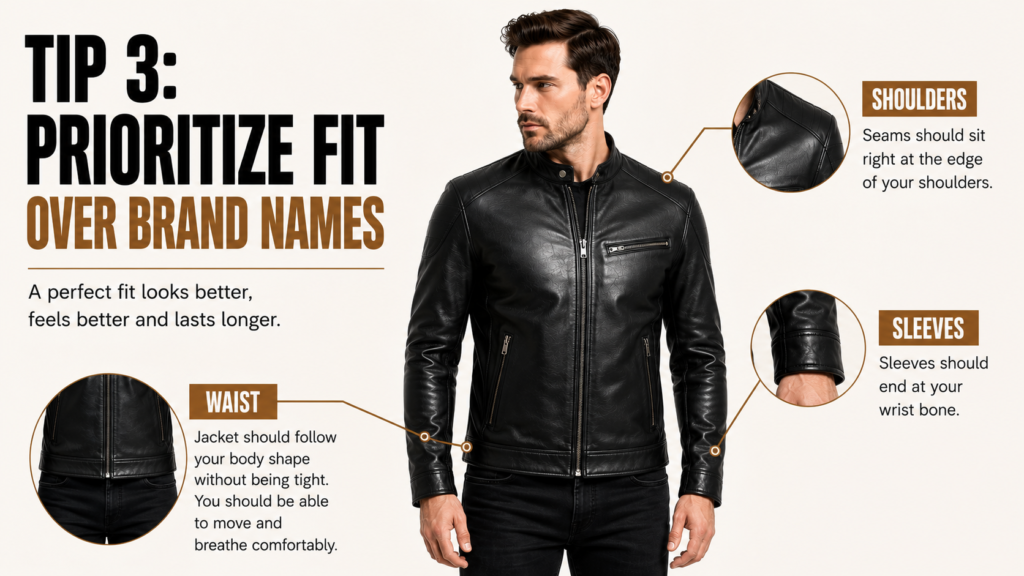
Check the Shoulders
- The shoulder seams should sit exactly where your shoulders end.
- If they extend too far, the jacket is too large.
Check the Sleeves
- Sleeves should finish at your wrist bone.
- Too long looks oversized.
- Too short appears awkward.
Check the Body Length
- Most classic leather jackets end around the waist.
- A proper length creates balanced proportions while allowing comfortable movement.
Remember Leather Stretches
- Unlike synthetic fabrics, genuine leather gradually molds to your body.
- Your new jacket should feel comfortably snug ,not painfully tight.
Tip 4: Examine the Craftsmanship Carefully
Quality craftsmanship separates a jacket that lasts decades from one that lasts only a few seasons.
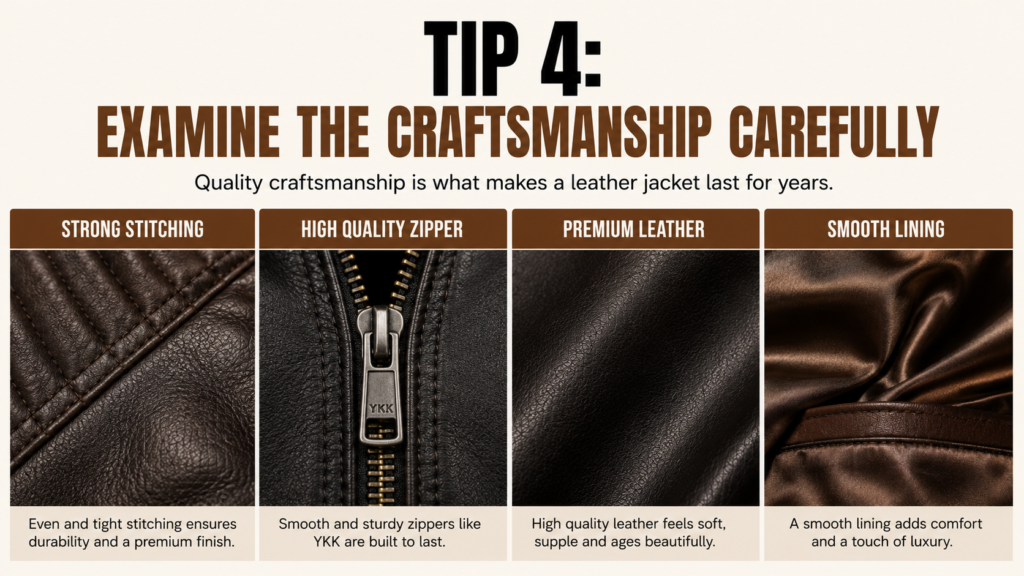
Stitching
Inspect every seam.
Premium jackets feature:
- Straight stitching
- Tight seams
- No loose threads
- Consistent spacing
Uneven stitching often indicates poor manufacturing.
Zippers and Hardware
- High-quality metal zippers should glide smoothly.
- Buttons and snaps should feel secure without wobbling.
- Reliable hardware is essential because replacing broken zippers can be expensive.
Interior Lining
A comfortable lining makes a noticeable difference.
Common materials include:
- Cotton
- Polyester
- Satin
- Quilted insulation
Choose a lining that matches the climate where you’ll wear the jacket most often.
Tip 5: Set a Budget Before Shopping
Leather jackets range from under $100 to well over $1,000.
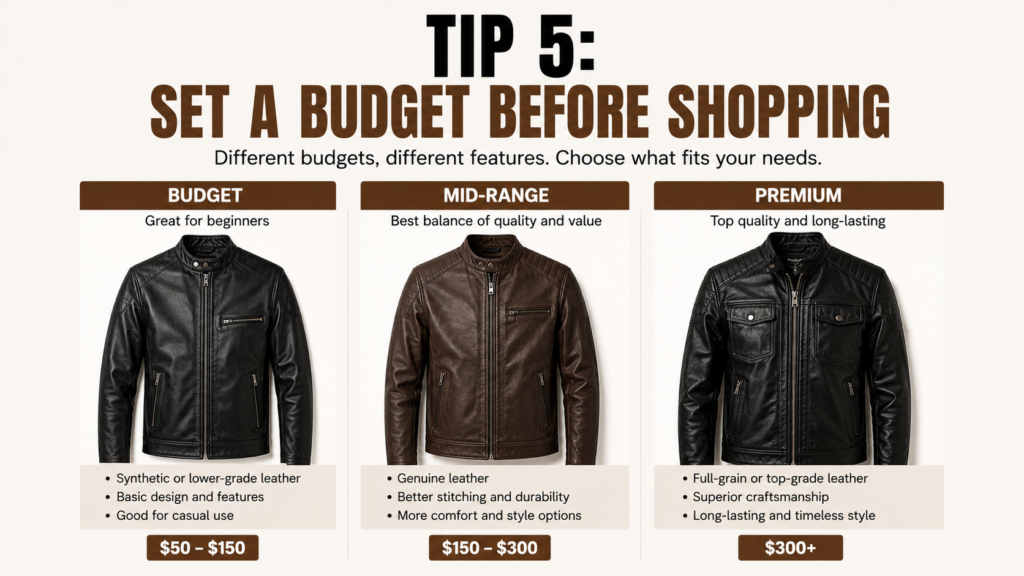
Knowing your budget helps narrow your options.
Budget Range ($100–$250)
- Usually genuine leather or high-quality faux leather.
- Suitable for beginners seeking affordability.
Mid-Range ($250–$600)
- Often includes top-grain leather with better craftsmanship.
- This range offers excellent value for most buyers.
Premium ($600+)
Expect:
- Full-grain leather
- Superior construction
- Luxury hardware
- Exceptional longevity
A premium jacket can last decades when properly maintained.
Tip 6: Pick a Versatile Color
Your first leather jacket should complement as much of your wardrobe as possible.
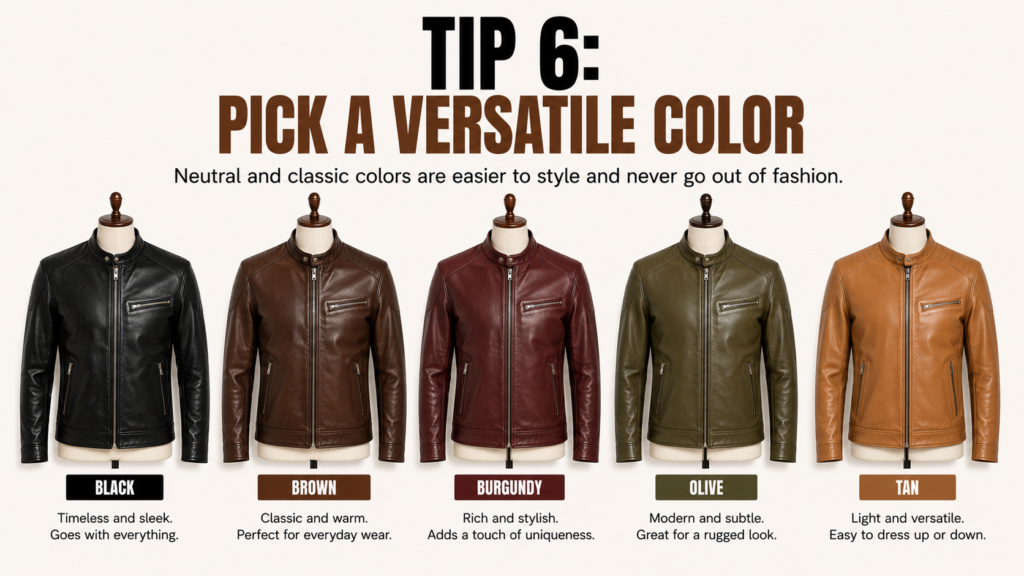
Black
- Black remains the most versatile choice.
- It pairs effortlessly with almost every outfit and suits nearly every occasion.
Brown
Brown leather creates a warmer, vintage-inspired appearance.
It works beautifully with:
- Blue denim
- Khaki
- Beige
- Olive
- Cream
Brown also develops a rich patina over time.
Other Colors
Modern collections also feature:
- Navy
- Burgundy
- Olive Green
- White
- Gray
- Tan
These colors are excellent additions once you already own a classic black or brown jacket.
Tip 7: Understand Leather Care Before Buying
Leather requires regular maintenance to stay in excellent condition.
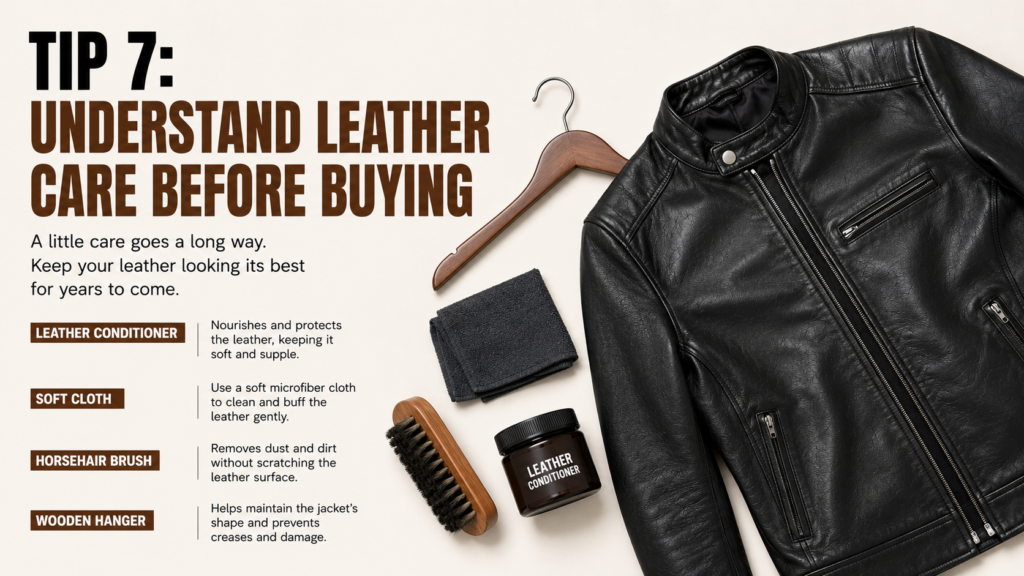
Fortunately, caring for it isn’t difficult.
Essential Care Tips
- Condition leather every 4–6 months.
- Store it on a wide wooden hanger.
- Keep it away from direct sunlight.
- Avoid excessive moisture.
- Clean spills immediately with a soft cloth.
Simple maintenance can dramatically increase the lifespan of your jacket.
Common Mistakes First-Time Buyers Make
Many shoppers regret their purchase because they rush the decision.
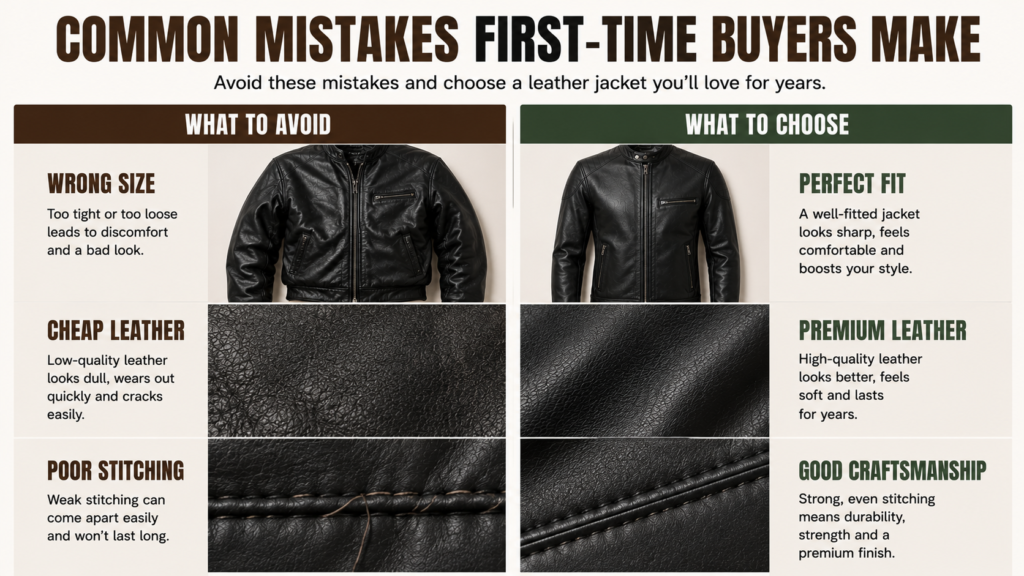
Avoid these common mistakes:
- Buying based only on appearance
- Ignoring leather quality
- Choosing the wrong size
- Focusing only on price
- Skipping customer reviews
- Not checking return policies
- Forgetting about long-term maintenance
A little research saves both money and frustration.
Should You Buy Online or In-Store?
Both options have advantages.
Buying In-Store
Pros:
- Try different sizes
- Feel the leather quality
- Compare styles instantly
Buying Online
Pros:
- Greater selection
- Better pricing
- Easier comparison shopping
When shopping online, always review the size chart, return policy, customer feedback, and detailed product images before placing your order.
How to Tell If a Leather Jacket Is High Quality
Use this quick checklist before making your purchase.
- Soft yet substantial leather
- Strong stitching
- Quality metal hardware
- Comfortable lining
- Symmetrical construction
- Natural leather smell
- Smooth zipper operation
- Clean finishing around seams and edges
- If a jacket checks all these boxes, it’s likely built to last.
Styling Your First Leather Jacket
One reason leather jackets remain popular is their versatility.
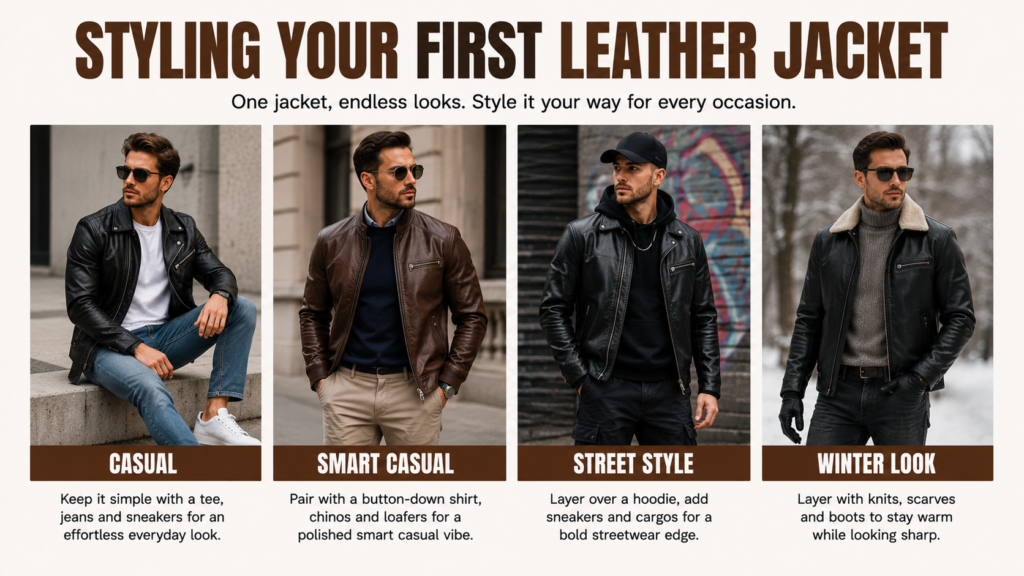
For casual wear:
- White T-shirt
- Blue jeans
- Sneakers
- Black biker jacket
For smart-casual occasions:
- Brown racer jacket
- Chinos
- Oxford shirt
- Leather boots
During colder months, layer your jacket over knitwear or lightweight hoodies for added warmth without sacrificing style.
Frequently Asked Questions
Should my leather jacket feel tight?
Yes. It should feel snug but not restrictive. Genuine leather naturally softens and conforms to your body over time.
Which leather is best for beginners?
Top-grain leather is often the best balance of quality, comfort, durability, and price.
Can I wear a leather jacket in the rain?
Light rain is generally fine, but prolonged exposure to water should be avoided. If your jacket gets wet, let it air dry naturally away from direct heat.
How often should I condition my leather jacket?
Every four to six months is sufficient for most climates. Jackets worn frequently in dry environments may benefit from more regular conditioning.
How long should a quality leather jacket last?
With proper care, a genuine leather jacket can easily last 20 years or more, making it one of the best long-term investments in any wardrobe.
Final Thoughts
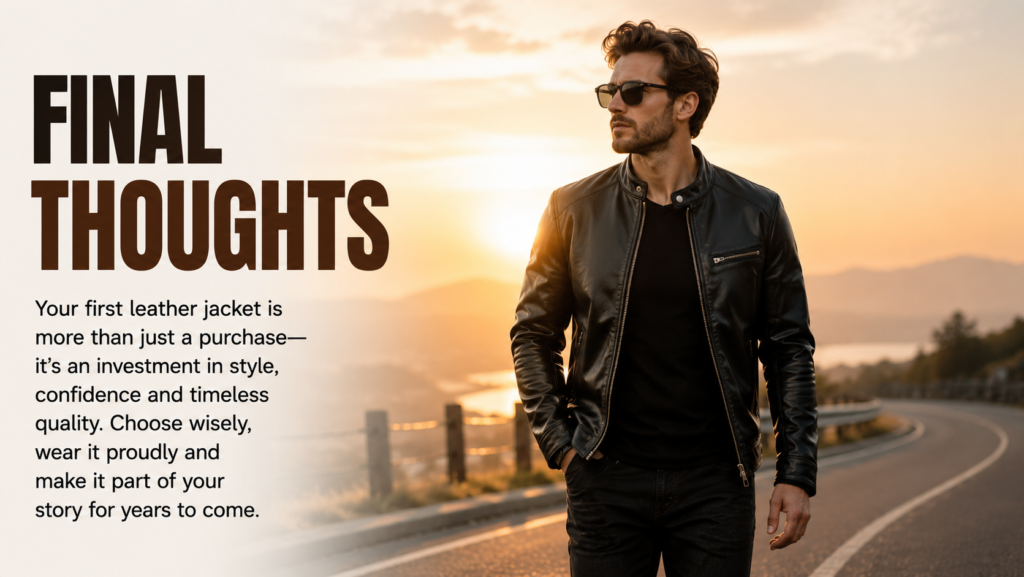
Buying your first leather jacket doesn’t have to be complicated. By understanding leather grades, selecting a timeless style, choosing the right fit, inspecting craftsmanship, setting a realistic budget, opting for a versatile color, and committing to basic maintenance, you’ll be well prepared to make a purchase you’ll appreciate for years.Rather than chasing short-lived fashion trends, invest in quality and choose a jacket that reflects your personal style. A well-made leather jacket is more than clothing, it’s a reliable companion that gains character with every season and becomes a lasting part of your wardrobe.