
How to Clean and Take Care of Your Shoes: The Complete Guide
Shoes do far more than complete an outfit. They protect your feet, support your posture, and often represent a significant investment. Whether you own premium leather dress shoes, casual canvas sneakers, elegant suede boots, or high-performance running shoes, proper maintenance dramatically extends their lifespan.Unfortunately, many people wait until their footwear looks worn out before thinking about cleaning it. By then, dirt, moisture, oils, and environmental contaminants have already penetrated deep into the material, making restoration more difficult.The good news is that maintaining shoes doesn’t require expensive equipment or professional services. With the right knowledge, a few quality tools, and a consistent routine, you can preserve your favorite pairs for many years.This comprehensive guide explains everything you need to know about cleaning, protecting, storing, and caring for every major type of footwear.
Why Proper Shoe Care Matters
Regular shoe maintenance offers benefits far beyond appearance.
Clean shoes last longer because accumulated dirt acts like microscopic sandpaper. Every step grinds abrasive particles into the material, accelerating wear.
Proper maintenance also:
- Prevents cracking
- Maintains flexibility
- Reduces odors
- Preserves color
- Protects stitching
- Improves comfort
- Saves money over time
Think of shoe care as preventative maintenance. Spending fifteen minutes each week can add several years to your favorite pair.
Understanding Different Shoe Materials
Before cleaning any footwear, identify its material. Every fabric requires different treatment.
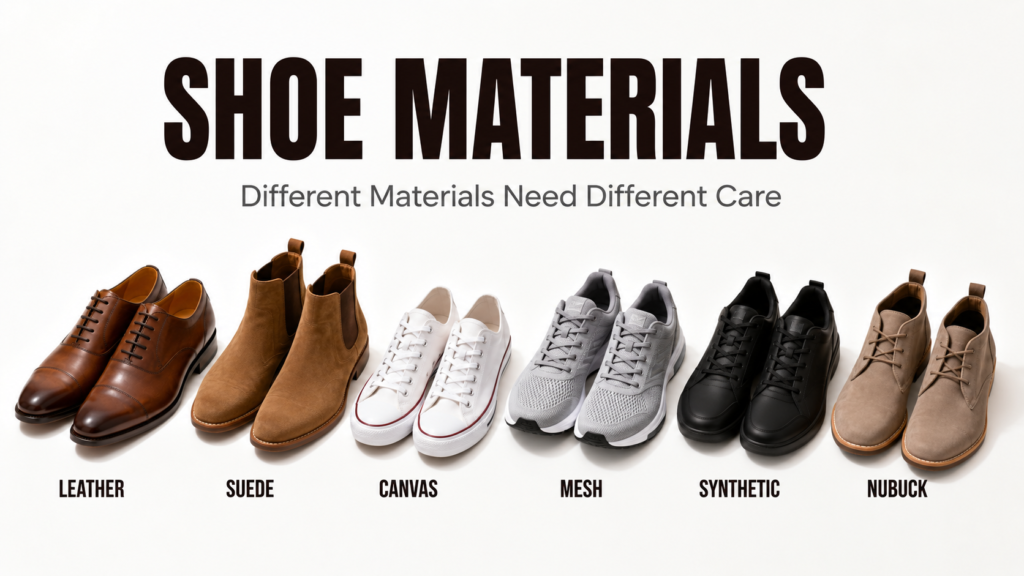
Leather Shoes
Leather is durable, breathable, and develops beautiful character over time. However, it needs regular conditioning because natural oils gradually evaporate.
Without conditioning, leather becomes brittle and susceptible to cracking.
Suede Shoes
Suede has a soft, velvety texture made from the underside of animal hide.
Its luxurious appearance comes with one challenge: it absorbs moisture and stains extremely quickly.
Specialized brushes and cleaners are essential.
Nubuck Shoes
Nubuck resembles suede but is made from the outer surface of leather.
It is stronger yet equally sensitive to dirt and water.
Gentle cleaning preserves its distinctive texture.
Canvas Shoes
Canvas footwear is lightweight, breathable, and perfect for everyday wear.
Although durable, canvas easily absorbs dirt and can develop discoloration if not cleaned regularly.
Mesh Sneakers
Athletic shoes commonly feature breathable mesh.
These materials trap dust, sweat, and bacteria, making regular cleaning essential.
Avoid harsh scrubbing, which can damage delicate fibers.
Synthetic Shoes
Modern synthetic materials imitate leather while offering improved water resistance.
Most synthetic shoes are relatively easy to clean using mild soap and warm water.
Essential Shoe Cleaning Supplies
Creating a small shoe care kit makes maintenance quick and efficient.
Recommended supplies include:
- Soft microfiber cloths
- Horsehair brush
- Soft toothbrush
- Mild dish soap
- Leather cleaner
- Leather conditioner
- Suede brush
- Suede eraser
- Waterproof spray
- Shoe trees
- Magic eraser for soles
- Cotton swabs
- White vinegar
- Baking soda
Quality tools reduce cleaning time while preventing accidental damage.
Preparing Shoes Before Cleaning
Preparation significantly improves cleaning results.
Begin by removing the laces.
Next, remove the insoles if possible.
Brush away loose dirt using a soft brush before introducing any moisture.
This simple step prevents dirt from turning into muddy residue during cleaning.
Always test new cleaning products on a hidden area first.
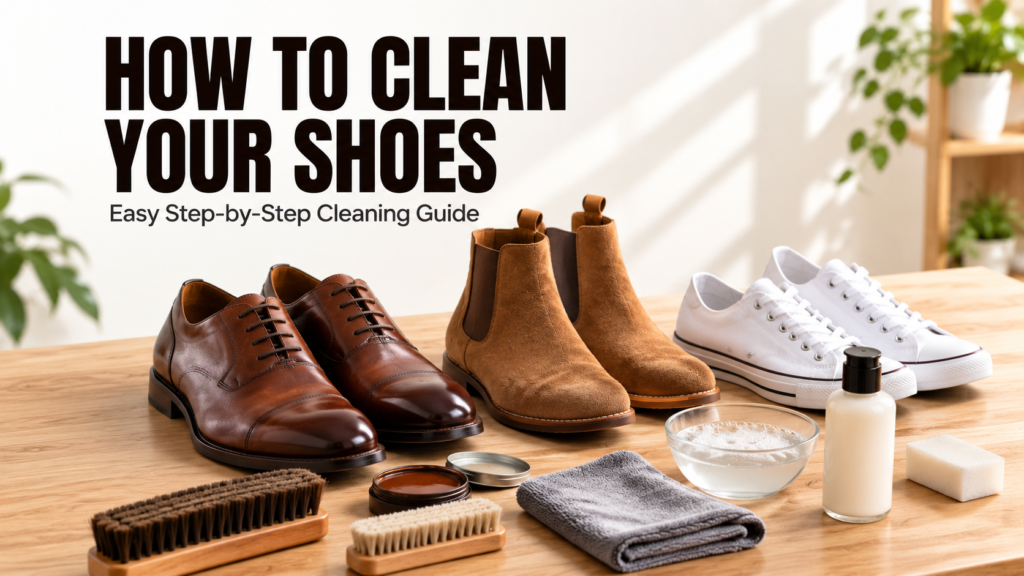
How to Clean Leather Shoes
Leather deserves careful attention.
Step 1
Brush away surface dust.
Step 2
Apply leather cleaner using circular motions.
Avoid soaking the leather.
Step 3
Wipe away residue with a clean microfiber cloth.
Step 4
Allow shoes to air dry naturally.
Step 5
Apply leather conditioner.
Conditioners restore moisture lost through daily wear.
Step 6
Finish with shoe polish if desired.
Buff until a rich shine develops.
Properly maintained leather can remain beautiful for decades.
How to Clean Suede Shoes
Never clean suede while wet.
Allow mud to dry completely.
Use a suede brush to restore the nap.
For stubborn marks, use a suede eraser.
Special suede cleaners work well for difficult stains.
After cleaning, brush in one direction to restore the original texture.
Finish with suede protector spray.
How to Clean Canvas Shoes
Canvas shoes tolerate more aggressive cleaning than leather.
Mix warm water with mild soap.
Dip a soft brush into the solution.
Gently scrub stained areas.
Rinse using a damp cloth instead of submerging the shoe.
Stuff the shoes with paper towels while drying.
This helps maintain their shape.
How to Clean White Sneakers
White shoes reveal every stain.
Create a cleaning paste using baking soda and water.
Apply using a toothbrush.
Clean midsoles separately.
Magic erasers remove stubborn scuff marks exceptionally well.
Avoid chlorine bleach, which can cause yellowing.
Instead, use oxygen-based cleaners.
How to Clean Running Shoes
Running shoes accumulate sweat, dirt, and bacteria rapidly.
Remove insoles.
Hand wash with mild detergent.
Use a soft brush for mesh uppers.
Clean the outsole thoroughly since embedded debris affects traction.
Never place performance shoes in a dryer.
High temperatures weaken adhesives.
How to Remove Stubborn Stains
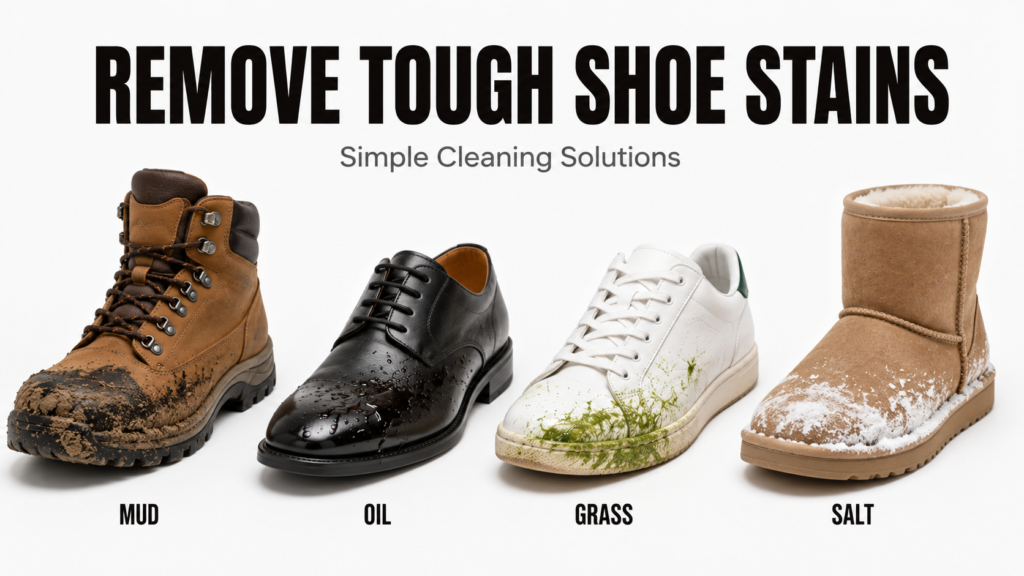
Mud Stains
- Allow mud to dry completely.
- Brush away loose particles.
- Clean remaining residue with mild soap.
Oil and Grease
- Sprinkle baking soda or cornstarch over the stain.
- Leave overnight.
- Brush away powder before cleaning normally.
Salt Stains
- Winter salt damages leather.
- Mix equal parts water and white vinegar.
- Wipe affected areas gently.
- Condition afterward.
Grass Stains
- Use mild soap first.
- Persistent stains may require diluted rubbing alcohol.
- Always test before use.
How to Clean Shoe Soles
- Dirty soles make even expensive shoes appear neglected.
- Use warm soapy water and a stiff brush.
- For white midsoles, a magic eraser often restores the original brightness.
- Clean tread grooves using an old toothbrush.
- Remove trapped stones carefully.
Eliminating Shoe Odors Naturally
Odors originate from bacteria thriving in warm, damp environments.
Simple natural solutions include:
- Baking soda overnight
- Cedar shoe trees
- Activated charcoal bags
- Tea bags
- Proper ventilation
Wash removable insoles regularly.
Allow shoes to dry completely between wears.
Drying Shoes the Right Way
Improper drying ruins shoes.
Never place footwear:
- Near heaters
- On radiators
- Inside dryers
- Under direct sunlight for extended periods
Instead:
Fill shoes with newspaper or paper towels.
Replace damp paper every few hours.
Allow natural airflow to complete the drying process.
Patience protects adhesives, leather, and stitching.
Conditioning and Protecting Leather Shoes
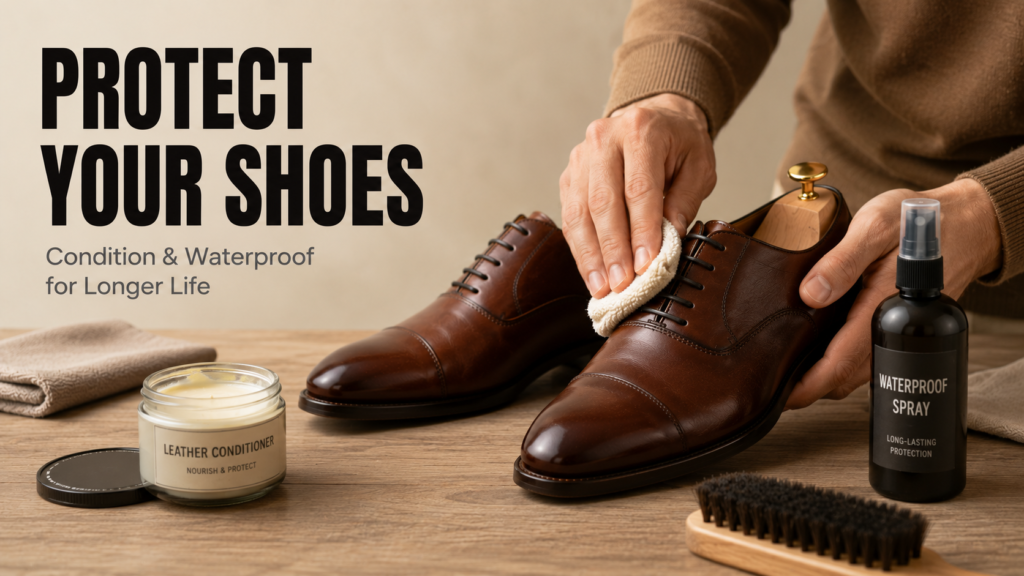
Leather loses natural oils over time.
Condition every two to three months.
More frequently if shoes experience heavy use.
Apply thin layers.
Allow absorption.
Buff gently.
Conditioning maintains flexibility while preventing cracks.
Waterproofing Shoes for Long-Term Protection
Waterproof sprays create an invisible protective barrier.
Different materials require different formulations.
Leather waterproofing products differ from suede protectors.
Reapply every few months.
Especially during rainy seasons.
Protection is easier than restoration.
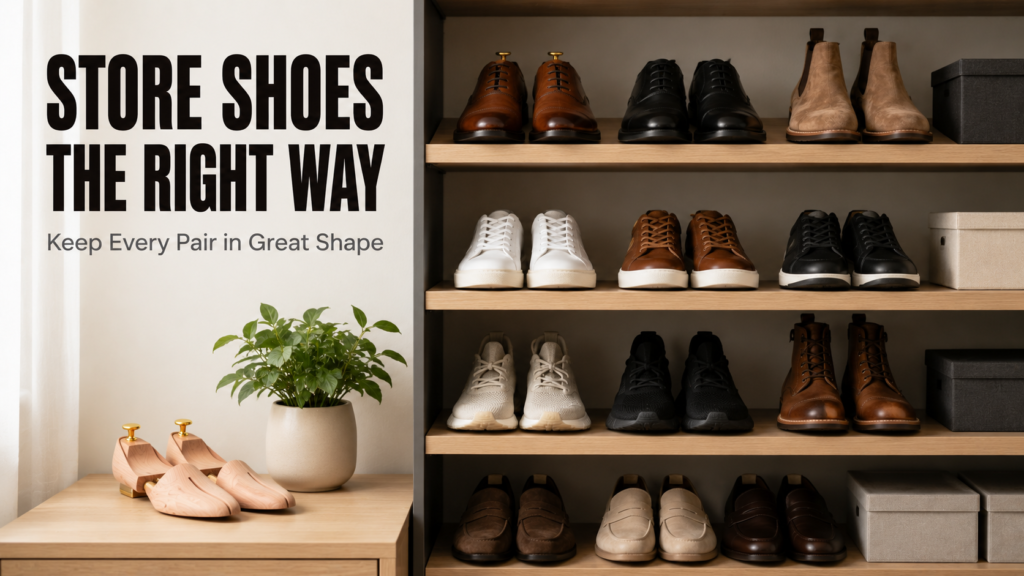
Proper Shoe Storage Tips
Storage significantly influences shoe longevity.
Keep shoes in cool, dry environments.
Avoid humid basements.
Avoid sealed plastic containers.
Instead:
- Use breathable shoe bags
- Insert cedar shoe trees
- Store upright
- Keep pairs together
- Avoid stacking heavy shoes
Good storage prevents deformation and mold growth.
Rotating Shoes to Extend Their Life
Daily use prevents shoes from drying completely.
Experts recommend rotating between at least two or three pairs.
This allows moisture to evaporate naturally.
The result is:
- Less odor
- Better comfort
- Longer lifespan
- Reduced sole wear
Even premium footwear benefits from rest.
Common Shoe Care Mistakes to Avoid
Many people unknowingly shorten their shoes’ lifespan.
Avoid these mistakes:
- Machine washing leather shoes
- Drying with direct heat
- Using excessive water
- Skipping conditioning
- Ignoring small stains
- Wearing wet shoes
- Using incorrect brushes
- Forgetting waterproof protection
Small habits make an enormous difference.
Seasonal Shoe Care Tips
Spring
- Clean away winter salt.
- Condition leather.
- Inspect stitching.
Summer
- Reduce sweat buildup.
- Air shoes frequently.
- Clean canvas regularly.
Autumn
- Apply waterproof protection.
- Inspect soles before rainy weather.
Winter
- Remove salt immediately.
- Dry shoes naturally.
- Store seasonal footwear correctly.
- Each season presents unique challenges.
- Adjust your maintenance routine accordingly.
Professional Shoe Cleaning: When Is It Worth It?
Certain situations justify professional restoration.
Consider expert cleaning when dealing with:
- Luxury leather footwear
- Designer sneakers
- Deep oil stains
- Severe water damage
- Mold growth
- Color restoration
- Sole replacement
Professional cobblers possess specialized equipment unavailable to most homeowners.
Sometimes restoration costs far less than replacement.
Frequently Asked Questions
How often should shoes be cleaned?
Light cleaning after every few wears is ideal. Deep cleaning every month keeps shoes in excellent condition.
Can shoes go in the washing machine?
Some canvas shoes can. Leather, suede, and premium athletic footwear should always be hand cleaned.
Is vinegar safe for shoes?
Yes, in moderation. Diluted white vinegar effectively removes salt stains and odors but should never replace dedicated leather cleaners.
Should leather shoes be polished?
Yes. Polishing protects the surface while restoring shine and color.
What is the best way to prevent odors?
Rotate shoes, wear clean socks, use cedar shoe trees, and allow footwear to dry completely between uses.
Final Thoughts
Your shoes accompany you through daily commutes, important meetings, celebrations, travel adventures, and countless unforgettable moments. They deserve thoughtful care in return.Routine maintenance is not merely about preserving appearance—it safeguards comfort, performance, and long-term value. Whether you’re caring for elegant leather loafers, dependable work boots, classic canvas sneakers, or high-performance running shoes, consistent cleaning and proper storage can dramatically extend their lifespan while keeping them looking their best.Simple habits such as brushing away dirt after use, conditioning leather, waterproofing vulnerable materials, rotating pairs, and allowing shoes to dry naturally all contribute to better durability. These small efforts require only a few minutes but can save substantial money by delaying costly replacements.Ultimately, well-maintained shoes are a reflection of attention to detail and smart ownership. Build a regular shoe care routine, use products suited to each material, and address stains or damage early. With the right approach, your favorite footwear can remain comfortable, stylish, and reliable for many years to come.