
Best Running Shoes: The Complete Buying Guide for Comfort, Speed, and Performance
Introduction to Running Shoes
Running appears deceptively simple. Lace up a pair of shoes, step outside, and start moving. Yet every stride places several times your body weight through your feet, ankles, knees, and hips. The shoes beneath you become more than mere accessories—they serve as shock absorbers, stability systems, and performance enhancers.Selecting the best running shoes is one of the smartest investments any runner can make. Whether preparing for a first 5K, training for a marathon, or simply enjoying morning jogs, wearing the proper footwear can dramatically improve comfort while reducing the likelihood of injury.This guide explores everything needed to choose running shoes with confidence.
Why Choosing the Right Running Shoe Matters
Every runner moves differently.Some land on their heels, while others strike with the middle or front of the foot. Body weight, running surface, speed, flexibility, and biomechanics all influence how shoes should perform.
Proper footwear provides numerous benefits:
- Improved comfort
- Better energy return
- Reduced muscle fatigue
- Lower injury risk
- Enhanced stability
- Greater running efficiency
An unsuitable shoe may contribute to discomfort such as shin splints, plantar fasciitis, knee pain, Achilles irritation, or blisters.
Understanding Different Types of Running Shoes
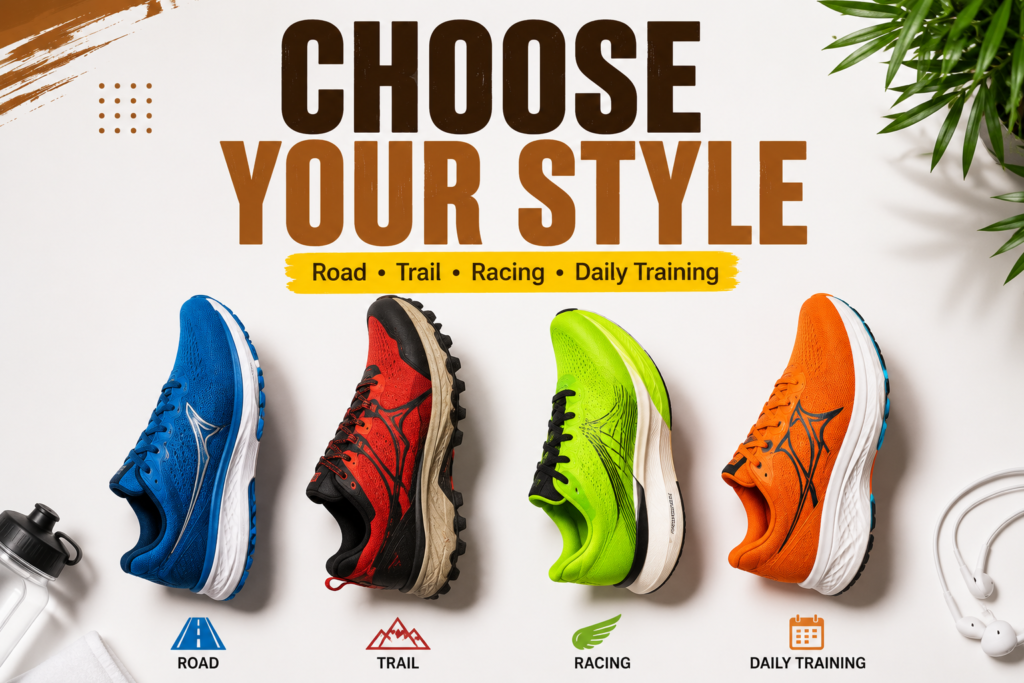
Road Running Shoes
Road running shoes are designed for sidewalks, asphalt, tracks, and paved pathways.
Characteristics include:
- Lightweight construction
- Responsive cushioning
- Flexible soles
- Smooth outsole patterns
These shoes prioritize efficient forward movement on firm surfaces.
Trail Running Shoes
Trail shoes are engineered for unpredictable terrain.
Features commonly include:
- Aggressive traction
- Reinforced toe protection
- Water-resistant materials
- Durable rubber outsoles
- Enhanced stability
They provide confidence on rocky, muddy, snowy, or uneven trails.
Racing Shoes
Performance-oriented runners often choose racing shoes.
Modern racing footwear incorporates:
- Ultra-lightweight materials
- Highly responsive foam
- Carbon-fiber plates
- Minimal weight
These innovations help maximize running economy during races and fast workouts.
Walking and Hybrid Shoes
- Hybrid shoes bridge walking, gym workouts, and light jogging.
- While versatile, dedicated runners generally achieve better performance with purpose-built running shoes.
How Running Shoes Have Evolved
Running footwear has transformed dramatically over recent decades.
Earlier models focused primarily on protection. Today’s shoes integrate sophisticated engineering, including:
- Nitrogen-infused foams
- Carbon plates
- Computer-designed midsoles
- Breathable engineered mesh
- Advanced traction compounds
These technologies improve comfort while increasing running efficiency.
Understanding Your Foot Type
Your foot structure significantly influences shoe selection.
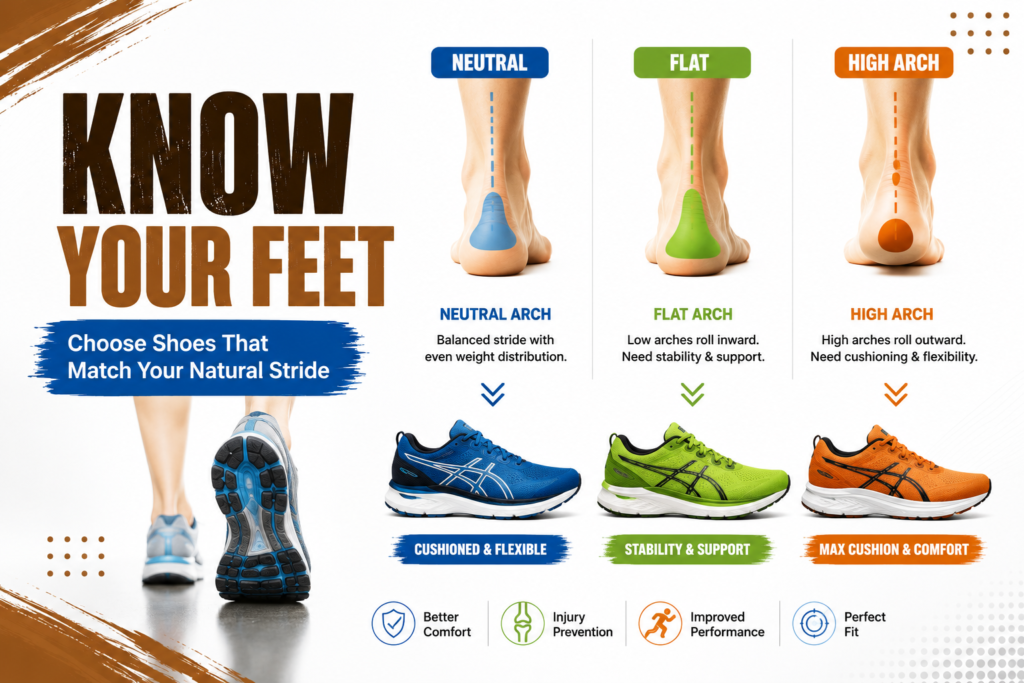
Neutral Feet
- Neutral arches distribute impact evenly.
- Most neutral runners benefit from cushioned neutral shoes that encourage natural movement.
Flat Feet
- Flat-footed runners often experience greater inward rolling, known as overpronation.
- Many benefit from stability shoes that guide foot motion while maintaining comfort.
High Arches
- High arches typically absorb less impact naturally.
- Extra cushioning helps reduce concentrated pressure during each stride.
Gait Analysis Explained
Gait analysis examines how your body moves while running.
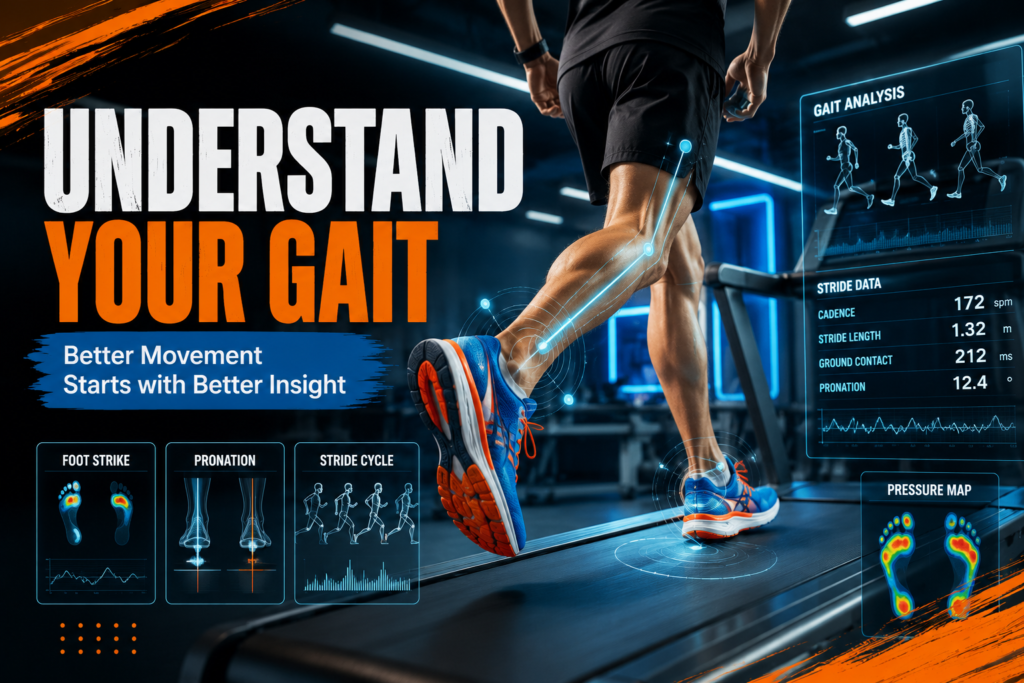
Specialists observe factors including:
- Foot strike
- Pronation
- Knee alignment
- Hip movement
- Stride length
- Cadence
This assessment helps identify footwear that complements natural biomechanics rather than working against them.
Cushioning Technologies
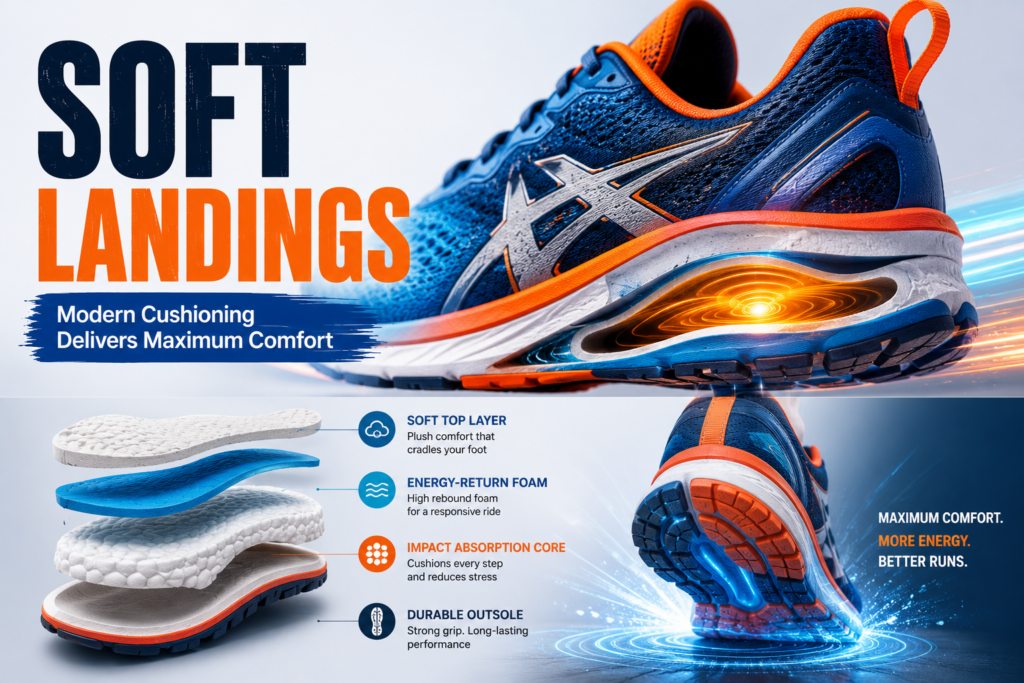
Cushioning is no longer simply “soft foam.”
Manufacturers now employ sophisticated materials that combine softness with responsiveness.
Common cushioning characteristics include:
- Shock absorption
- Energy return
- Long-lasting resilience
- Lightweight construction
Some runners prefer plush cushioning for endurance, while others enjoy firmer platforms that provide greater ground feel.Neither approach is universally superior; personal preference and running goals determine the ideal choice.
Stability vs. Neutral Shoes
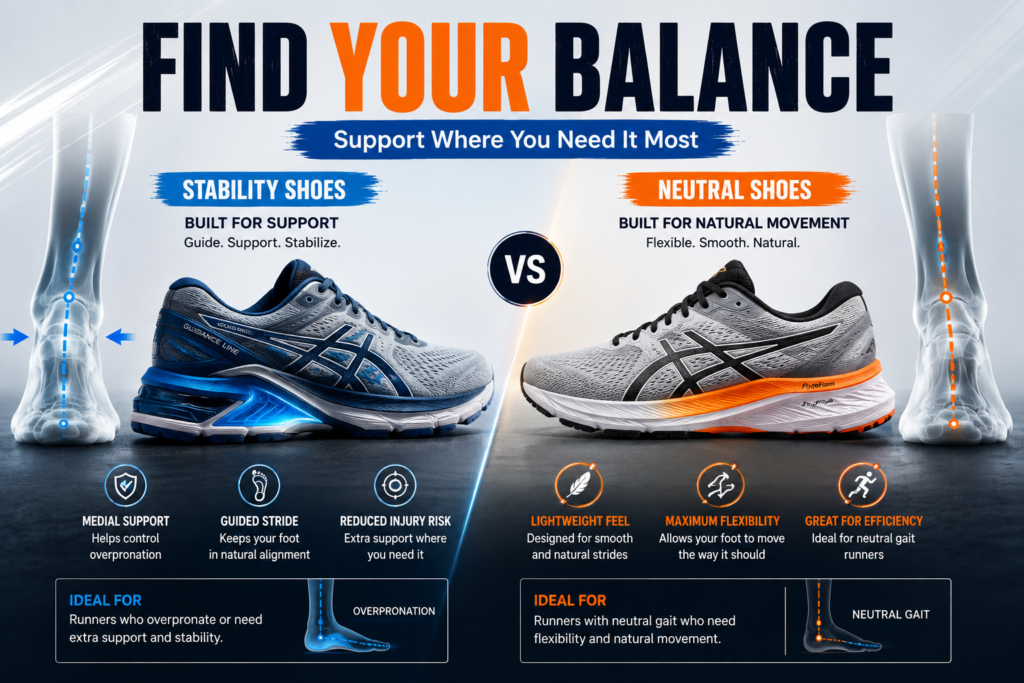
- Choosing between stability and neutral footwear remains one of the most important decisions.
- Neutral shoes are suitable for runners with efficient biomechanics.
- Stability shoes incorporate supportive structures that help moderate excessive inward foot motion without feeling overly restrictive.
- Comfort should always remain the deciding factor.
Heel-to-Toe Drop Explained
Heel-to-toe drop represents the height difference between the heel and forefoot.
General categories include:
- Low drop: 0–4 mm
- Medium drop: 5–8 mm
- High drop: 9–12 mm
Lower drops often encourage midfoot striking. Higher drops can reduce stress on the Achilles tendon and calf muscles. There is no universally perfect drop; adaptation and comfort matter most.
Shoe Weight and Performance
- Lighter shoes generally require less effort to swing through each stride.
- However, reducing weight often involves trade-offs.
- Ultra-light shoes may sacrifice durability or cushioning, while heavier trainers typically offer greater protection during high-mileage weeks.
- Balancing weight with intended use leads to the best results.
Best Running Shoes for Beginners
Beginners should prioritize comfort above all else.
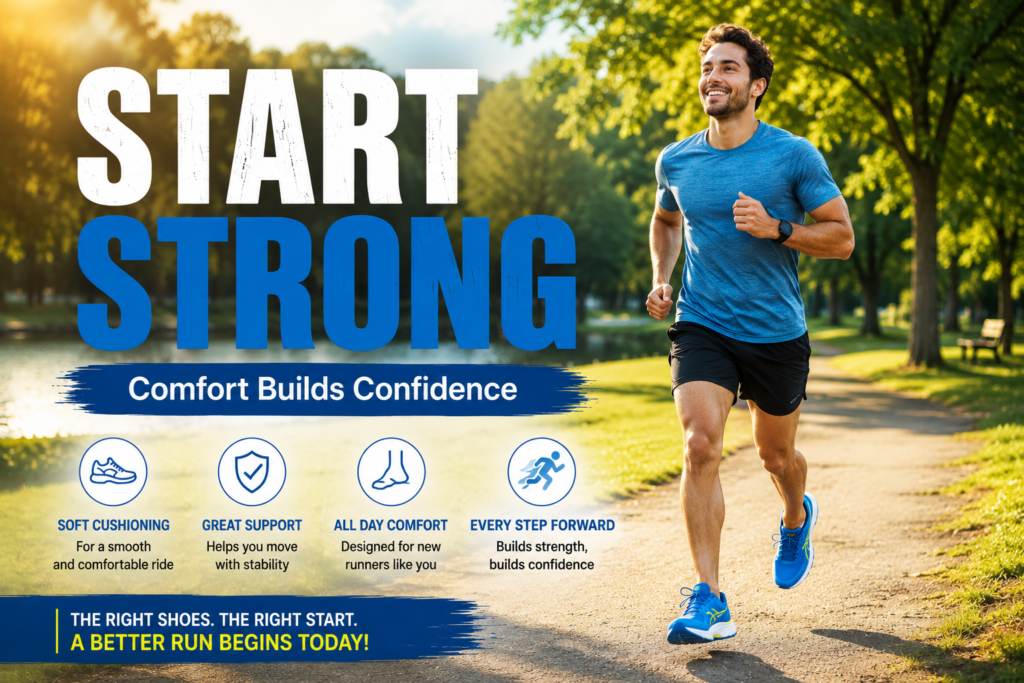
Ideal characteristics include:
- Moderate cushioning
- Comfortable fit
- Breathable upper
- Reliable durability
- Smooth transitions
The goal is building consistency rather than chasing cutting-edge technology.
Best Running Shoes for Long-Distance Running
Marathon and half-marathon training demands sustained comfort.
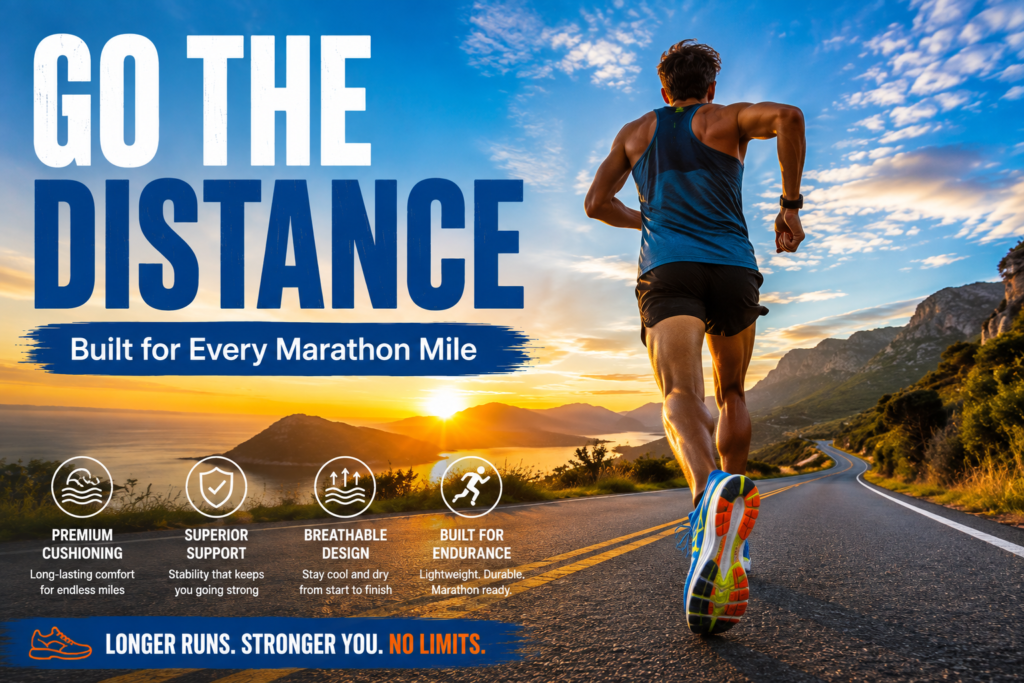
Long-distance shoes typically feature:
- Plush cushioning
- Stable platforms
- Durable midsoles
- Comfortable uppers
- Excellent shock absorption
Reducing fatigue becomes increasingly important over longer distances.
Best Running Shoes for Speed Training
Interval workouts and tempo runs benefit from responsive footwear.
Speed-oriented shoes often provide:
- Lightweight construction
- Quick transitions
- Firm, energetic midsoles
- Efficient toe-off
These characteristics encourage faster turnover and more dynamic running mechanics.
Best Trail Running Shoes
Trail footwear excels when conditions become challenging.
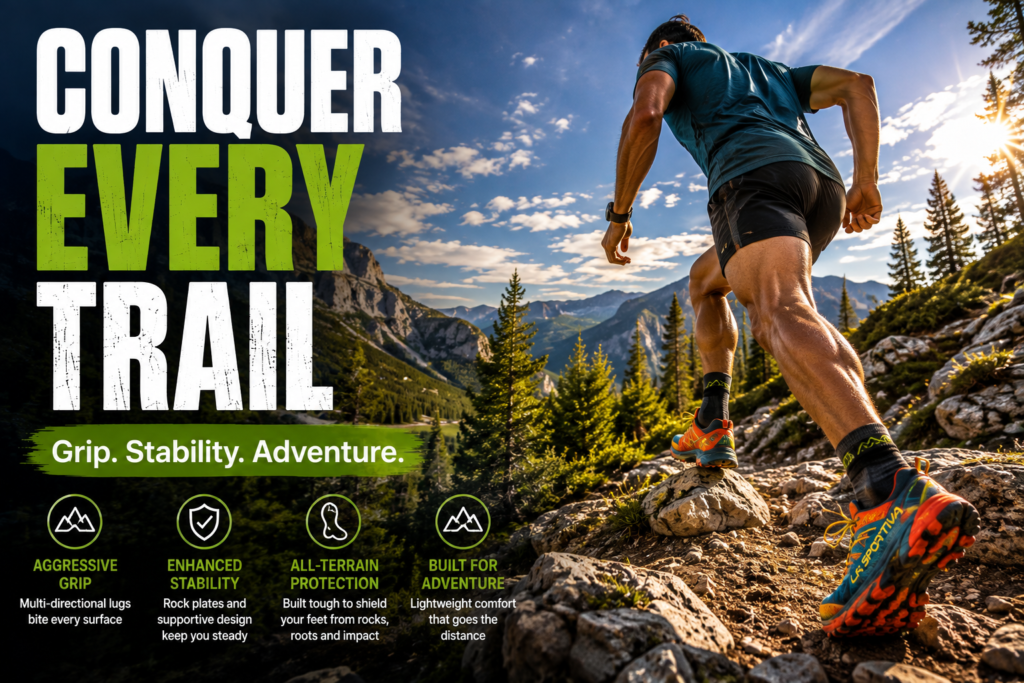
Key features include:
- Deep multidirectional lugs
- Rock protection
- Durable uppers
- Secure heel lockdown
- Strong lateral stability
These attributes inspire confidence across technical terrain.
Best Running Shoes for Flat Feet
Flat-footed runners should seek footwear that balances support with flexibility.
Helpful characteristics include:
- Stability guidance
- Moderate arch support
- Firm heel counters
- Durable midsoles
Comfort remains more important than aggressive correction.
Best Running Shoes for High Arches
High arches often require greater impact absorption.
Recommended features include:
- Plush cushioning
- Flexible midsoles
- Soft heel landings
- Pressure distribution
These elements reduce concentrated stress across the foot.
Best Running Shoes for Heavy Runners
Heavier runners frequently benefit from additional cushioning and structural durability.
Look for:
- High-volume foam
- Reinforced midsoles
- Durable rubber outsoles
- Stable heel platforms
- Long-lasting construction
Quality materials maintain performance over extended mileage.
How to Find the Perfect Fit
Fit outweighs nearly every technical specification.
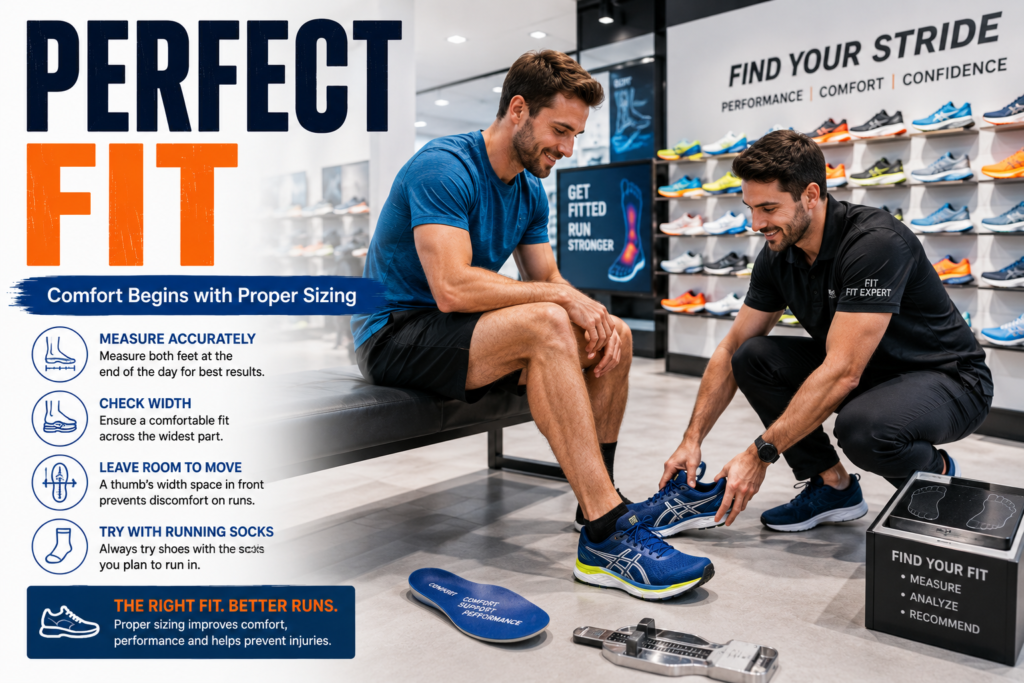
Keep these guidelines in mind:
- Leave about a thumb’s width of space in front of the longest toe.
- Ensure the heel remains secure without slipping.
- The midfoot should feel comfortably locked in place.
- Toes should spread naturally.
- Try shoes later in the day when feet are slightly swollen.
- Wear the socks intended for running during fitting.
Even the highest-rated shoe performs poorly if it does not fit correctly.
Common Running Shoe Buying Mistakes
Many runners unknowingly choose the wrong footwear.
Frequent mistakes include:
- Buying solely based on appearance
- Selecting shoes that are too small
- Ignoring foot shape
- Using one pair for every activity
- Continuing to wear worn-out shoes
- Assuming expensive automatically means better
Thoughtful selection delivers better long-term value.
Caring for Your Running Shoes
Proper maintenance extends shoe life.
Simple practices include:
- Allow shoes to air dry naturally.
- Remove dirt after trail runs.
- Rotate between two pairs when possible.
- Avoid machine drying.
- Store shoes in a cool, dry environment.
Consistent care preserves cushioning and structural integrity.
When to Replace Running Shoes
Running shoes gradually lose their protective qualities.
Most pairs perform effectively for approximately 300–500 miles (480–800 km), though this varies depending on body weight, running style, terrain, and shoe construction.
Signs that replacement may be needed include:
- Flattened cushioning
- Uneven outsole wear
- New aches or pains
- Reduced responsiveness
- Visible structural damage
Tracking mileage helps avoid running beyond a shoe’s effective lifespan.
Frequently Asked Questions
Are expensive running shoes always better?
Not necessarily. A shoe that fits your foot well and matches your running style is usually a better choice than a premium model that feels uncomfortable.
Can running shoes be used for walking?
Yes. Running shoes generally perform well for walking because they provide cushioning and flexibility.
Should running shoes feel tight?
No. They should feel secure without squeezing your toes or creating pressure points.
Is it okay to wear running shoes every day?
Occasional daily use is fine, but frequent casual wear can shorten the lifespan of the cushioning and outsole.
How many pairs of running shoes should I own?
Many regular runners benefit from rotating between two pairs. Rotation allows cushioning to recover between runs and may extend overall shoe life.
Final Thoughts
The best running shoes are not simply the most expensive or the most heavily advertised. They are the pair that complements your biomechanics, supports your training goals, and feels comfortable from the first mile to the last.
Take time to understand your foot type, running style, and preferred terrain before making a purchase. Prioritize fit over trends, replace shoes when they become worn, and remember that consistency in training begins with healthy, comfortable feet.
A well-chosen pair of running shoes can transform every run into a smoother, more enjoyable experience, helping you train confidently and reach your personal goals—whether you’re taking your first steps as a beginner or chasing a new personal best.