How to Choose Sunglasses: The Ultimate Buying Guide for Style, Comfort & Eye Protection (2026)
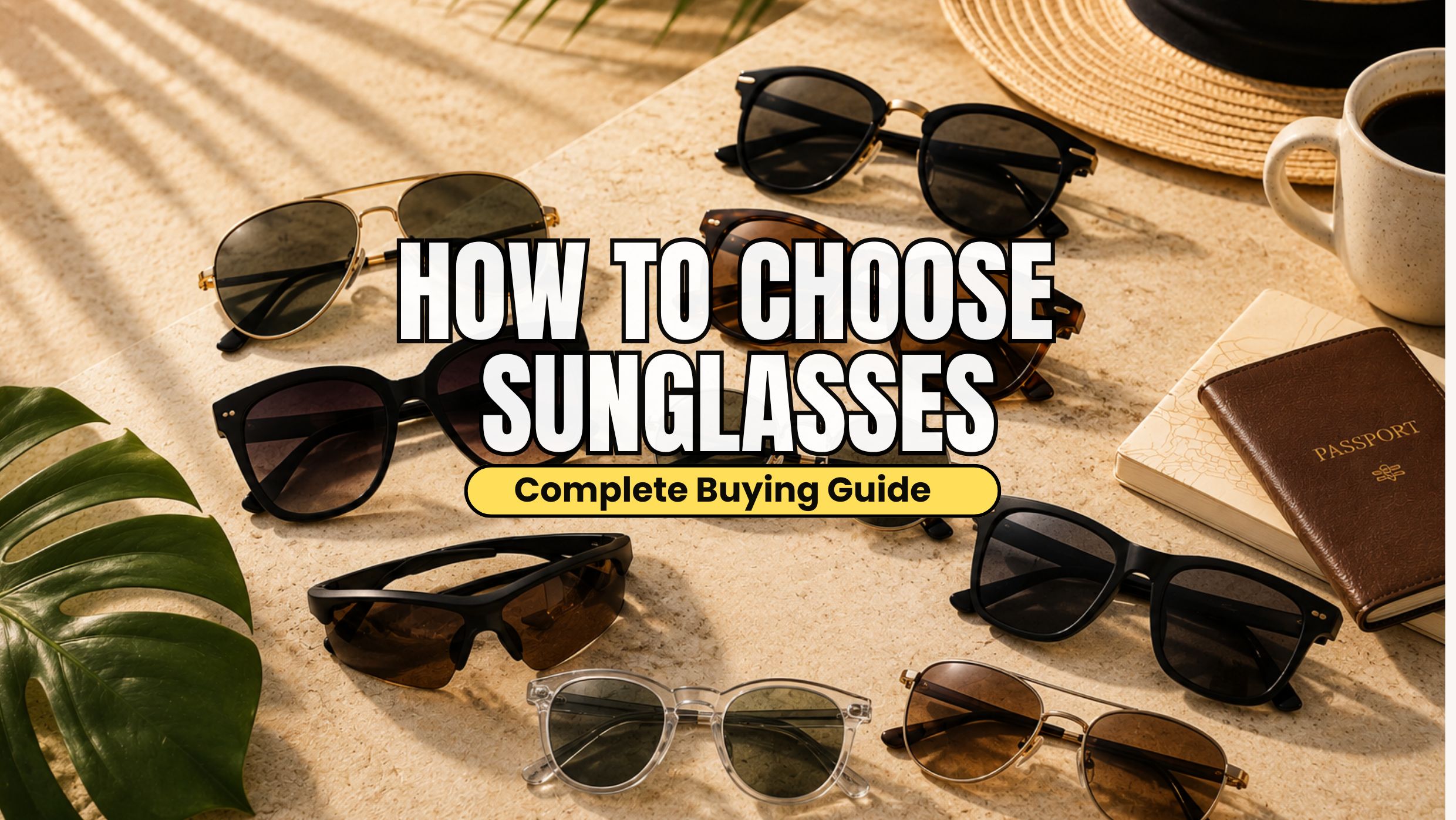
How to Choose Sunglasses
Sunglasses are one of the few accessories that combine fashion, comfort, and health protection in a single product. A stylish pair can elevate your outfit, but the real value of sunglasses lies in protecting your eyes from harmful ultraviolet (UV) rays, reducing glare, and making outdoor activities more comfortable.Many people buy sunglasses based only on appearance, often overlooking the features that truly matter. The darkest lenses aren’t always the safest, expensive brands don’t automatically provide better protection, and not every pair is suitable for driving, sports, or long days in the sun.Whether you’re shopping for your first pair or upgrading your current sunglasses, this guide will help you understand everything you need to know before making a purchase.
Why Sunglasses Are Essential All Year Round
One of the biggest myths about sunglasses is that they’re only needed during summer. In reality, UV rays are present throughout the year, even on cloudy days.Sunlight reflects off roads, water, snow, sand, and even buildings, increasing your exposure to ultraviolet radiation. Long-term exposure can contribute to eye problems such as:
- Cataracts
- Macular degeneration
- Photokeratitis (sunburn of the eye)
- Corneal damage
- Premature aging around the eyes
Wearing sunglasses consistently is one of the easiest ways to protect your long-term vision.
Quick Tip: If you wear sunscreen to protect your skin, you should also wear sunglasses to protect your eyes.
What Makes a Good Pair of Sunglasses?
The best sunglasses aren’t necessarily the most expensive—they’re the ones that combine eye protection, comfort, durability, and a style that suits your face.
A quality pair should offer:
- 100% UVA and UVB protection
- Comfortable fit without slipping
- Durable frame construction
- Clear, distortion-free lenses
- Proper coverage around your eyes
- Scratch-resistant coating
- Lightweight design for all-day wear
When these features come together, you get sunglasses that not only look great but also keep your eyes comfortable and protected.
Understanding UV Protection
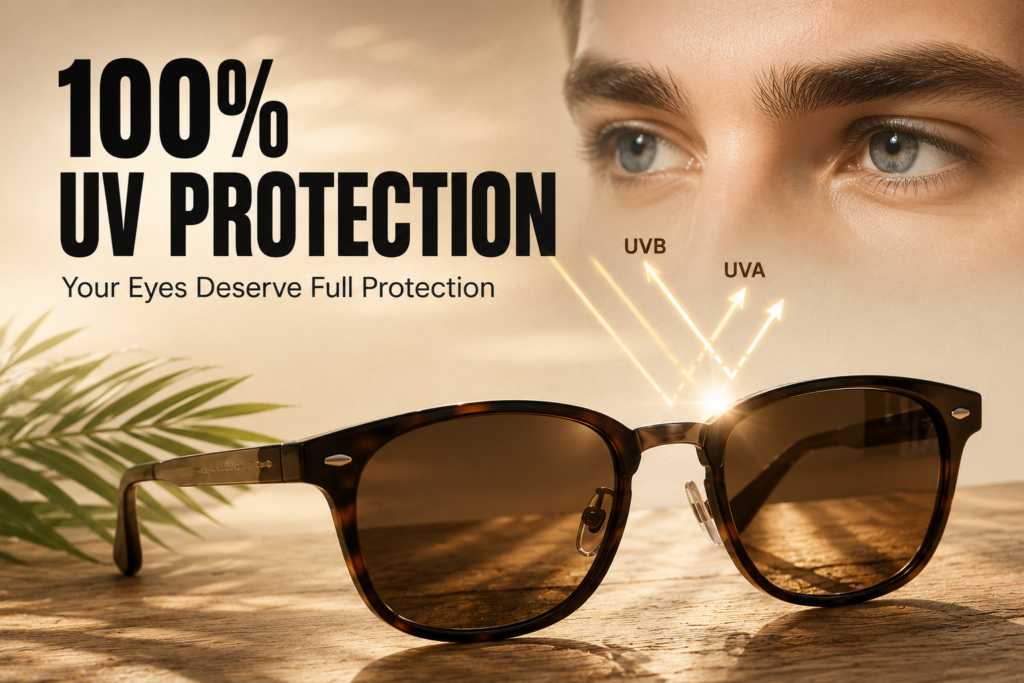
If you only check one feature before buying sunglasses, make it UV protection.
Ultraviolet light is invisible, but prolonged exposure can damage the eyes over time. Unlike visible brightness, you can’t tell how much UV protection a pair of sunglasses provides simply by looking at the lenses.
UVA vs. UVB Rays
The sun emits two main types of ultraviolet radiation that affect your eyes.
UVA Rays
UVA rays penetrate deeply into eye tissue and are present throughout the day, regardless of the season. Over many years, they can contribute to age-related eye diseases.
UVB Rays
UVB rays are more intense and can damage the surface of the eye. Extended exposure may cause painful conditions like photokeratitis and increase the risk of cataracts.
Both types are harmful, which is why complete protection is essential.
What Does UV400 Mean?
You’ll often see labels such as:
- UV400
- 100% UV Protection
- Blocks 100% UVA & UVB Rays
These labels indicate that the lenses block ultraviolet light up to 400 nanometers, covering virtually all harmful UVA and UVB radiation.
This is the standard you should always look for when shopping.
Avoid buying sunglasses without clear UV protection labeling.
Bigger Frames Mean Better Protection
Fashion trends often favor oversized sunglasses—and in this case, style has a practical advantage.
Large lenses protect not only your eyes but also the delicate skin surrounding them.
Wraparound sunglasses offer even greater protection because they prevent sunlight from entering from the sides.
They’re especially useful for:
- Cycling
- Hiking
- Beach vacations
- Boating
- Skiing
- Driving on bright days
More coverage means fewer UV rays reaching your eyes.
Dark Lenses Don’t Always Mean Better Protection
This is one of the most common misconceptions.
A very dark lens without UV protection can actually be worse than wearing no sunglasses at all.
Why?
- Dark lenses cause your pupils to dilate. If the lenses don’t block UV rays, more harmful radiation enters your eyes.
- The color or darkness of a lens has very little to do with its ability to filter ultraviolet light.
- Always prioritize certified UV protection over lens darkness.
Polarized vs. Non-Polarized Sunglasses
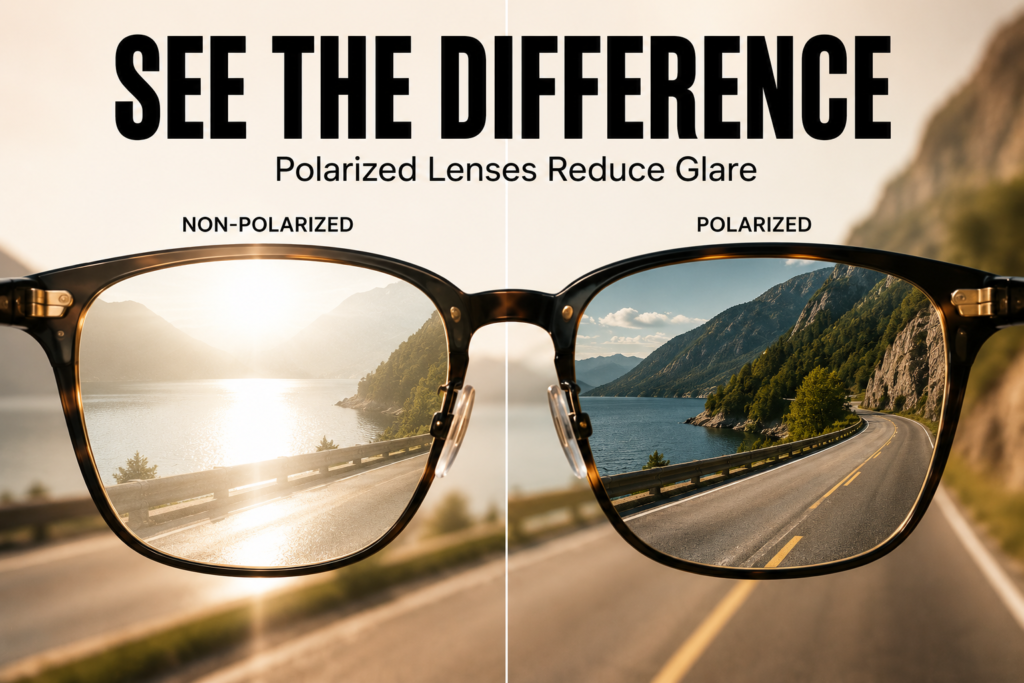
- Many shoppers confuse polarization with UV protection.
- They’re completely different features.
What Are Polarized Lenses?
Polarized lenses contain a special filter that blocks reflected glare from flat surfaces like:
- Water
- Roads
- Snow
- Glass buildings
- Car hoods
This makes outdoor vision much clearer.
Benefits of Polarized Sunglasses
- Reduced glare
- Less eye fatigue
- Better contrast
- Improved driving visibility
- More comfortable boating and fishing
- Easier viewing in bright sunlight
Do Polarized Lenses Block UV Rays?
Not necessarily.
Polarization reduces glare—but it doesn’t automatically block ultraviolet radiation.
Many high-quality polarized sunglasses include UV400 protection, but some budget models may not.
Always check that your sunglasses offer both:
✔ Polarization
✔ 100% UV Protection
Choosing the Best Lens Material
The material used in your lenses affects durability, comfort, optical clarity, and safety.
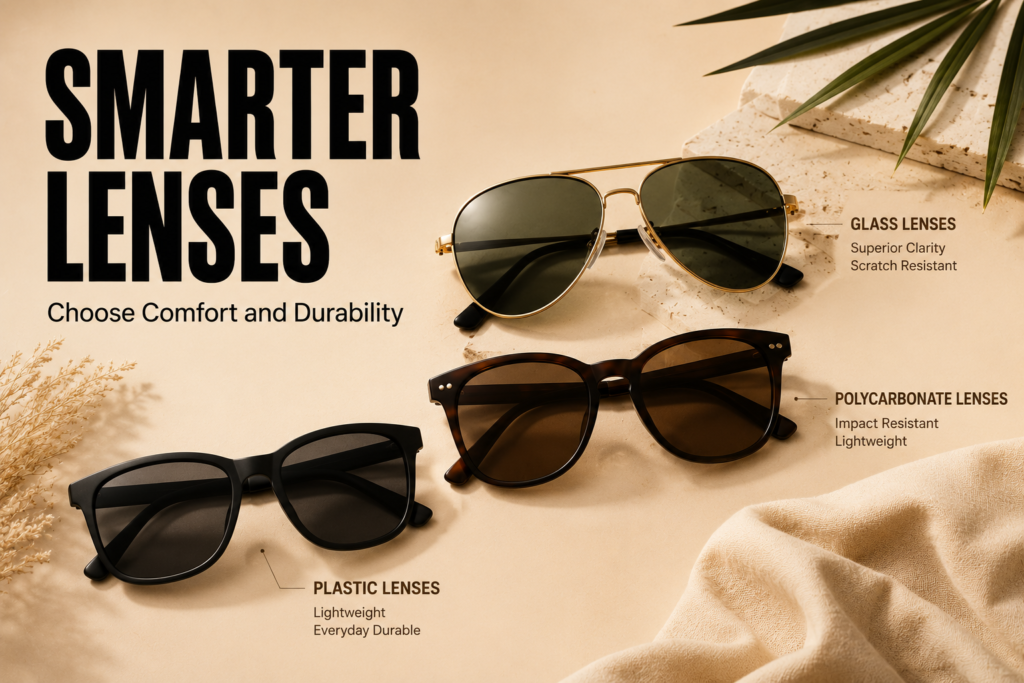
Glass Lenses
Glass lenses provide exceptional clarity and resist scratches better than most plastics.
Pros
- Excellent visual quality
- Superior scratch resistance
- Long lifespan
Cons
- Heavier
- Can shatter under strong impact
- Less suitable for sports
Glass lenses are ideal for casual everyday use when impact resistance isn’t a major concern.
Polycarbonate Lenses
Polycarbonate is one of the most popular choices today.
These lenses are:
- Extremely lightweight
- Highly impact-resistant
- Comfortable
- Great for sports
- Excellent for children
Because they’re softer than glass, adding a scratch-resistant coating is highly recommended.
High-Index Plastic Lenses
People with stronger prescriptions often prefer high-index lenses.
Benefits include:
- Thinner profile
- Lighter weight
- Better appearance
- Comfortable for all-day wear
These are especially useful for prescription sunglasses.
How to Check Lens Quality Before Buying
Even sunglasses that claim UV protection should provide clear, undistorted vision.
Here’s a simple test:
- Find a straight-lined object, such as floor tiles, window blinds, or a brick wall.
- Hold the sunglasses a short distance from your face.
- Look through one lens.
- Slowly move the glasses left, right, up, and down.
If the straight lines appear wavy or distorted, the lenses may have poor optical quality.
Good-quality lenses keep lines straight and your vision natural.
Impact Resistance Matters
While no sunglass lens is completely unbreakable, impact-resistant materials provide greater safety.
If you:
- Play sports
- Ride motorcycles
- Cycle regularly
- Hike
- Work outdoors
choose sunglasses with polycarbonate or other impact-resistant lenses.
These lenses are less likely to shatter than traditional glass, making them a safer option for active lifestyles.
Choosing the Right Lens Color
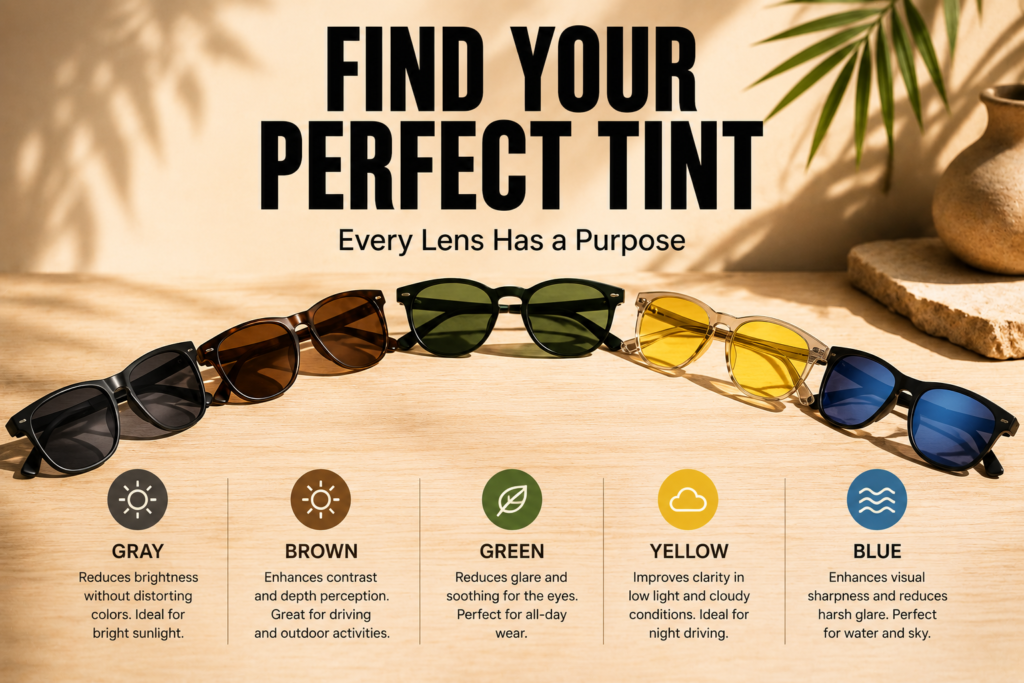
Many people assume lens color is purely cosmetic, but different tints can improve visibility and comfort in specific environments. While lens color doesn’t determine UV protection, it does affect how you perceive contrast, brightness, and depth.
Gray Lenses
Gray is one of the most versatile lens colors because it reduces brightness without significantly changing natural colors.
Best for:
- Everyday use
- Driving
- Walking
- Beach trips
- General outdoor activities
Gray lenses are an excellent all-around choice if you want true color perception.
Brown and Amber Lenses
Brown and amber lenses increase contrast and improve depth perception, making them popular among outdoor enthusiasts.
Ideal for:
- Hiking
- Golf
- Cycling
- Fishing
- Baseball
- Variable weather conditions
These lenses also reduce eye strain on partly cloudy days.
Green Lenses
Green lenses balance brightness reduction with natural color accuracy.
They perform well in both sunny and partly cloudy conditions.
Great for:
- Daily wear
- Tennis
- Outdoor recreation
- Walking
- City use
Yellow and Gold Lenses
Yellow lenses brighten your surroundings in low-light conditions.
They’re helpful during:
- Fog
- Early morning
- Late afternoon
- Overcast weather
However, they aren’t suitable for bright midday sunlight.
Blue and Mirror-Coated Lenses
Mirror coatings reduce visible light entering your eyes, making them useful in very bright environments like beaches and snowy mountains.
Remember that mirror finishes don’t automatically provide better UV protection. Always check that they are labeled 100% UV Protection or UV400.
Choosing the Right Frame Material
Frame material affects comfort, durability, weight, and appearance.
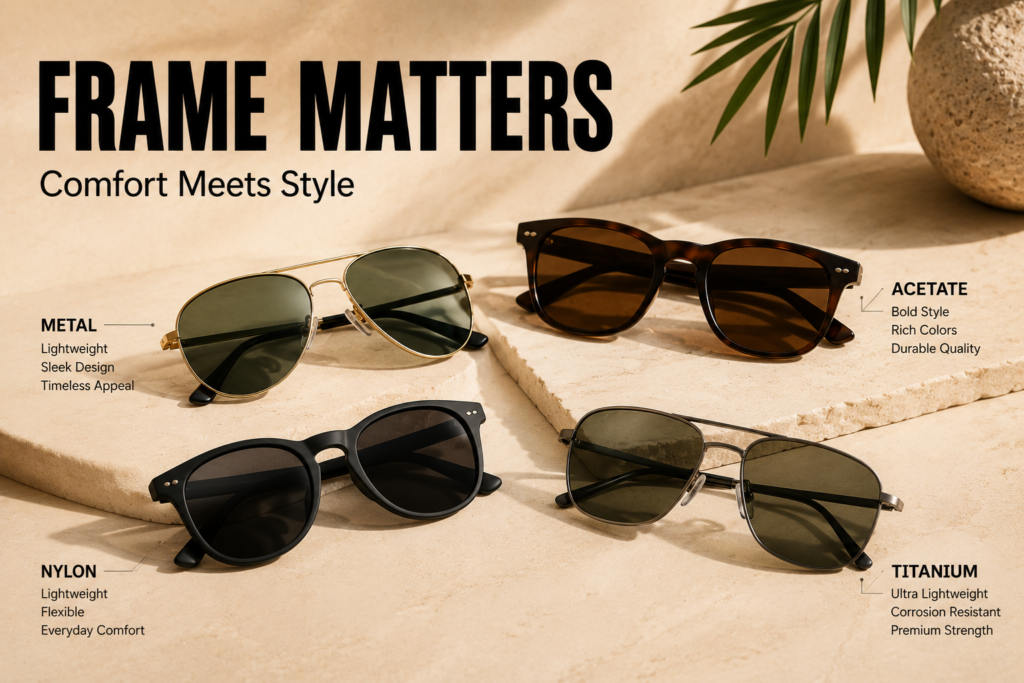
Metal Frames
Metal frames offer a timeless, sophisticated look.
Advantages
- Lightweight
- Adjustable nose pads
- Slim profile
- Elegant appearance
They’re ideal for business professionals and everyday wear.
Acetate Frames
Acetate is a premium plastic known for vibrant colors and durability.
Benefits include:
- Comfortable fit
- Stylish finishes
- Rich color options
- Strong construction
Many premium fashion sunglasses use acetate frames.
Nylon Frames
If you’re active, nylon is one of the best choices.
It is:
- Flexible
- Lightweight
- Heat resistant
- Durable
Perfect for sports and outdoor adventures.
Titanium Frames
Titanium combines luxury with exceptional performance.
Advantages include:
- Extremely lightweight
- Corrosion resistant
- Hypoallergenic
- Highly durable
Although more expensive, titanium frames often last for many years.
How to Choose Sunglasses for Your Face Shape
Selecting a frame that complements your face shape can dramatically improve your overall appearance. The goal is to create balance rather than simply following trends.
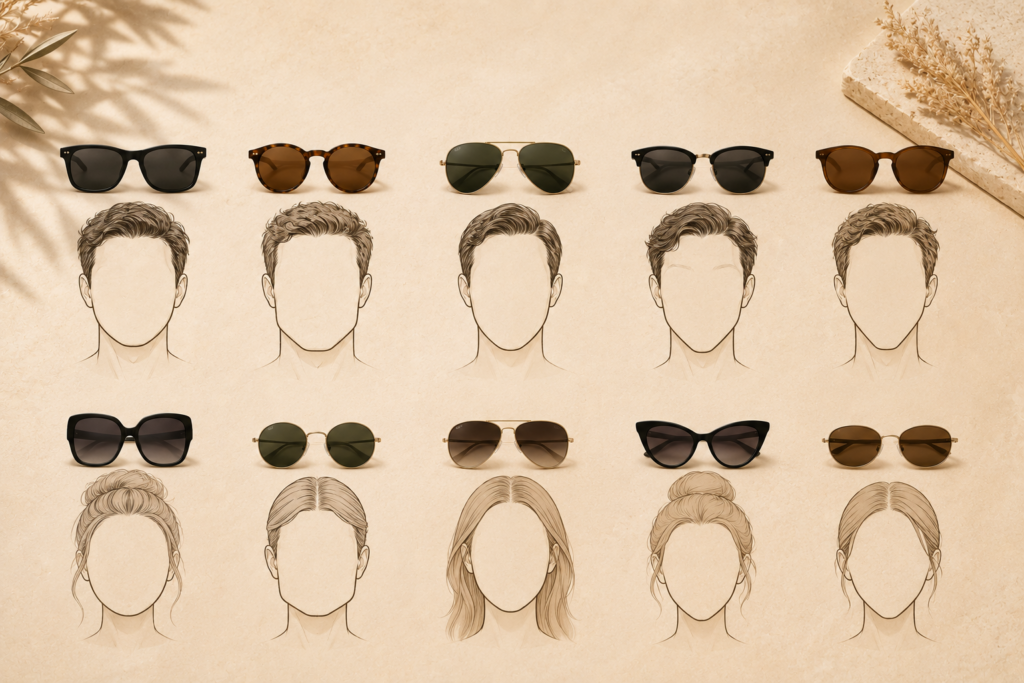
Round Face
Round faces have softer curves with similar width and height.
Choose frames that add structure.
Best styles:
- Rectangle
- Square
- Wayfarer
- Geometric frames
Avoid very small round frames that emphasize facial roundness.
Square Face
Square faces feature a broad forehead and a strong jawline.
Rounded frames help soften these angles.
Recommended styles:
- Aviator
- Oval
- Round
- Curved frames
These create a more balanced appearance.
Oval Face
Oval faces are considered the most versatile because almost every frame style works well.
Popular options include:
- Clubmaster
- Aviator
- Wayfarer
- Square
- Round
Choose frames that are proportionate to your face size.
Heart-Shaped Face
This face shape typically has a wider forehead and a narrower chin.
Look for frames that create balance.
Good choices include:
- Round
- Oval
- Rimless
- Light-colored frames
Diamond Face
Diamond-shaped faces have high cheekbones with narrower foreheads and chins.Frames that soften sharp angles work best.
Try:
- Oval
- Cat-eye
- Rimless
- Browline frames
Choosing the Right Size
Even the most stylish sunglasses won’t feel good if they don’t fit properly.
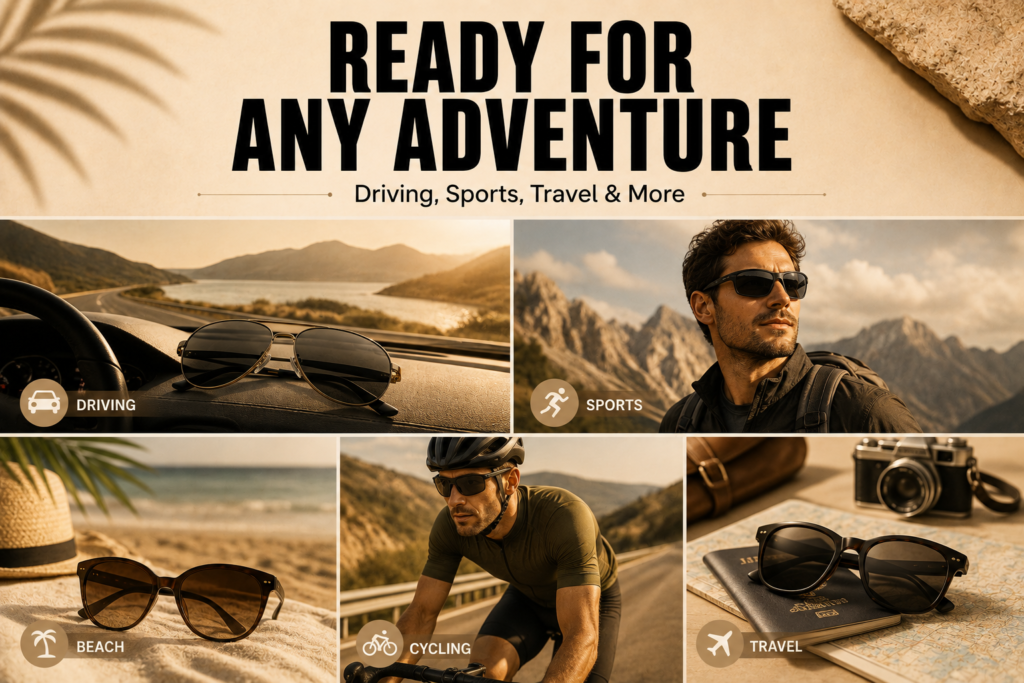
A well-fitting pair should:
- Sit comfortably on your nose
- Stay in place when you move
- Not pinch behind your ears
- Cover your eyes completely
- Leave a small gap between your cheeks and the lenses
Oversized sunglasses can provide extra protection, but they should still fit securely.
Comfort Is Just as Important as Style
Many buyers focus only on appearance and ignore comfort.
If you’ll wear sunglasses for several hours, look for:
- Lightweight construction
- Soft nose pads
- Flexible temples
- Balanced weight distribution
- Smooth hinges
A comfortable pair is one you’ll actually wear every day.
Best Sunglasses for Driving
Driving requires clear vision and reduced glare.
Look for sunglasses with:
- Polarized lenses
- Gray or brown tint
- UV400 protection
- Lightweight frames
- Medium-sized lenses
Avoid lenses that are extremely dark because they can reduce visibility in tunnels or at dusk.
Best Sunglasses for Sports
Athletes need sunglasses designed for movement and impact resistance.
Choose:
- Polycarbonate lenses
- Wraparound frames
- Rubber nose pads
- Non-slip temple grips
- Lightweight materials
These features help sunglasses stay secure during running, cycling, hiking, golf, tennis, and other outdoor activities.
Best Sunglasses for the Beach
Beach environments expose your eyes to sunlight from above and reflected light from sand and water.
Look for:
- Polarized lenses
- Large frames
- Wraparound design
- Scratch-resistant coating
- Saltwater-resistant materials
These features improve comfort during long days outdoors.
Best Sunglasses for Travel
When traveling, versatility matters.
A good travel pair should be:
- Lightweight
- Durable
- Easy to pack
- Comfortable for long wear
- Suitable for different lighting conditions
Neutral gray lenses are usually the safest all-around choice.
Prescription Sunglasses
If you wear prescription glasses every day, prescription sunglasses can significantly improve outdoor comfort.
Benefits include:
- Clear vision
- No need for contact lenses
- Better driving safety
- Comfortable all-day wear
- Consistent eye protection
Although they cost more initially, many people find them well worth the investment.
Photochromic (Transition) Lenses
Transition lenses automatically darken when exposed to sunlight.
Advantages:
- One pair for indoor and outdoor use
- Convenient
- Automatic adjustment
- Comfortable in changing light
However, they may not darken fully inside cars because modern windshields block much of the UV light that activates them.
Designer vs. Budget Sunglasses
Many shoppers assume expensive sunglasses always provide better protection.That’s not true.The most important feature is 100% UV protection, regardless of price.Designer sunglasses often offer:
- Better craftsmanship
- Premium materials
- Longer lifespan
- Superior comfort
- Luxury styling
Budget sunglasses can still provide excellent protection if they meet UV400 standards.
Features Worth Paying Extra For
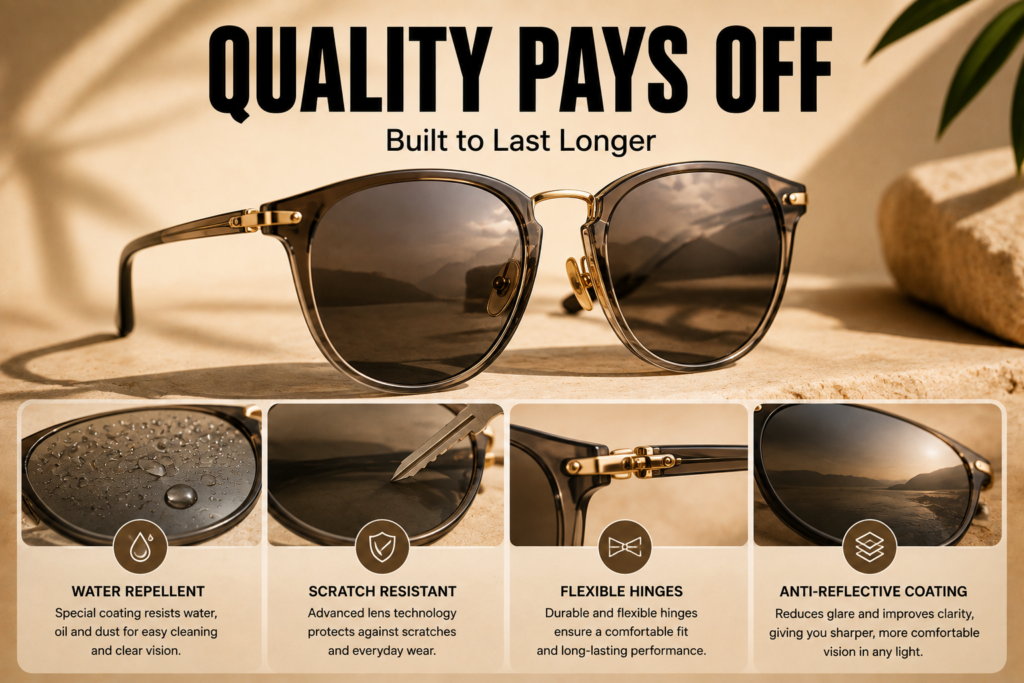
Not every premium feature is necessary, but some upgrades can make a noticeable difference in comfort, durability, and performance. If you wear sunglasses frequently, investing in these features is often worthwhile.
Scratch-Resistant Coating
Even high-quality lenses can develop scratches over time. A scratch-resistant coating helps protect the lens surface from everyday wear, keeping your vision clear and extending the life of your sunglasses.
Anti-Reflective Coating
An anti-reflective (AR) coating reduces light reflections from the back of the lenses. This is especially helpful when the sun is behind you or when driving, as it minimizes distracting reflections and improves visual comfort.
Hydrophobic and Oleophobic Coatings
These specialized coatings repel water, sweat, fingerprints, and oils. They’re particularly useful for people who spend time outdoors or live in humid climates, making the lenses easier to clean and maintain.
Flexible Hinges
Spring or flexible hinges allow the temples to move outward without breaking easily. They improve comfort and can help your sunglasses last longer with regular use.
Common Mistakes to Avoid When Buying Sunglasses
Many people unknowingly choose sunglasses that look great but don’t provide the protection or comfort they need.
Here are some of the most common mistakes:
Buying Based on Appearance Alone
Style is important, but it should never come before eye protection. Always check the UV rating before making a purchase.
Assuming Dark Lenses Offer Better Protection
Lens darkness affects visible light, not UV protection. A dark lens without UV protection can actually expose your eyes to more harmful radiation.
Ignoring the Fit
Loose sunglasses can slide down your nose, while tight frames may cause headaches or discomfort. Always try to find a pair that feels secure without pinching.
Choosing the Wrong Lens Type
Different activities require different lenses. For example:
- Driving: Polarized gray or brown lenses
- Sports: Polycarbonate wraparound lenses
- Beach: Polarized oversized sunglasses
- Everyday use: Neutral gray or green lenses
Forgetting About Lens Quality
Poor-quality lenses may cause visual distortion, leading to eye strain and fatigue. Before buying, inspect the lenses carefully or perform a simple distortion test if possible.
Situations Where Regular Sunglasses Aren’t Enough
Although sunglasses provide excellent everyday protection, they aren’t designed for every light source.
Standard sunglasses should never be used when:
- Looking directly at the sun
- Watching a solar eclipse
- Welding
- Using tanning beds
- Working with industrial lasers
These situations require specialized eye protection designed specifically for those hazards.
How to Care for Your Sunglasses
Taking proper care of your sunglasses helps maintain both their appearance and performance.
Follow these simple tips:
- Store them in a hard protective case when not in use.
- Clean lenses with a microfiber cloth instead of paper towels or clothing.
- Use a lens-cleaning solution or clean water to remove dirt and oils.
- Avoid placing sunglasses lens-side down on hard surfaces.
- Don’t leave them on a hot car dashboard, as excessive heat can warp frames and damage lens coatings.
- Tighten loose screws occasionally or have them adjusted by an optical professional.
With proper care, a quality pair of sunglasses can last for many years.
When Should You Replace Your Sunglasses?
Even the best sunglasses won’t last forever.
Consider replacing them if:
- The lenses are heavily scratched.
- The frames are bent or cracked.
- They no longer fit comfortably.
- The lenses are visibly damaged or distorted.
- You suspect the UV coating has worn down after many years of use.
If you’re unsure about the condition of older sunglasses, many optical shops can test whether they still provide adequate UV protection.
Quick Sunglasses Buying Checklist
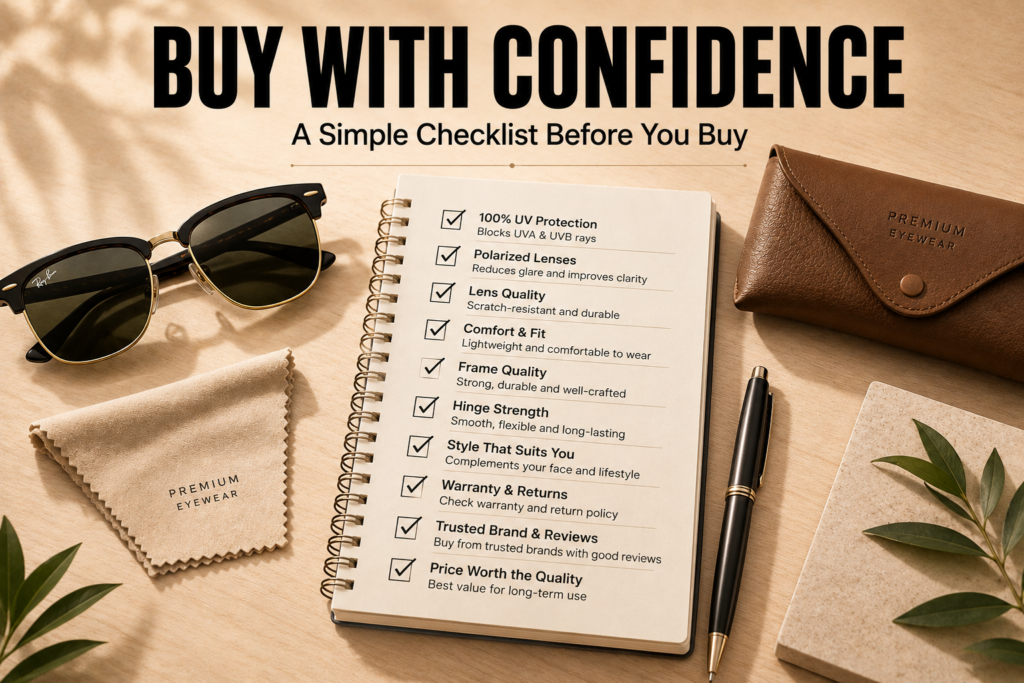
Before purchasing a new pair, use this checklist:
- 100% UVA and UVB protection (UV400)
- Comfortable fit without slipping
- High-quality, distortion-free lenses
- Frame size suits your face
- Lens color matches your intended use
- Polarized lenses if you drive or spend time near water
- Durable frame material
- Scratch-resistant coating
- Impact-resistant lenses for sports
- Protective case included
Checking these features can help you choose sunglasses that offer long-lasting comfort and protection.
Frequently Asked Questions
Are expensive sunglasses better?
Not necessarily. Price often reflects branding, materials, and craftsmanship rather than UV protection. Affordable sunglasses labeled UV400 or 100% UVA/UVB protection can provide excellent eye safety.
Are polarized sunglasses worth it?
Yes, especially if you drive, fish, boat, ski, or spend time near water. Polarized lenses reduce glare and improve visual comfort, though they should also include UV protection.
Can children wear adult sunglasses?
Children should wear sunglasses designed specifically for them. Kids’ sunglasses are made to fit smaller faces securely while providing the same level of UV protection.
Is UV protection more important than lens color?
Absolutely. Lens color affects brightness and contrast, but UV protection is what shields your eyes from harmful radiation.
Can I wear sunglasses on cloudy days?
Yes. Up to 80% of UV rays can pass through clouds, making eye protection important throughout the year.
Which lens color is best for everyday use?
Gray lenses are the most versatile because they reduce brightness without altering natural colors.
Are glass lenses better than plastic lenses?
Glass lenses offer exceptional optical clarity and scratch resistance, while plastic and polycarbonate lenses are lighter and more impact-resistant. The best choice depends on your lifestyle.
What are the best sunglasses for driving?
Choose sunglasses with:
- Polarized lenses
- UV400 protection
- Gray or brown tint
- Comfortable, medium-sized frames
These features help reduce glare while maintaining natural color perception.
Can sunglasses prevent eye diseases?
While sunglasses can’t guarantee prevention, wearing UV-protective eyewear consistently can reduce your long-term exposure to harmful ultraviolet rays, which are associated with conditions such as cataracts and certain forms of eye damage.
Do mirrored lenses provide extra UV protection?
Mirror coatings reduce visible light and glare but don’t automatically block more UV radiation. Always verify that mirrored sunglasses also provide 100% UV protection.
Final Thoughts
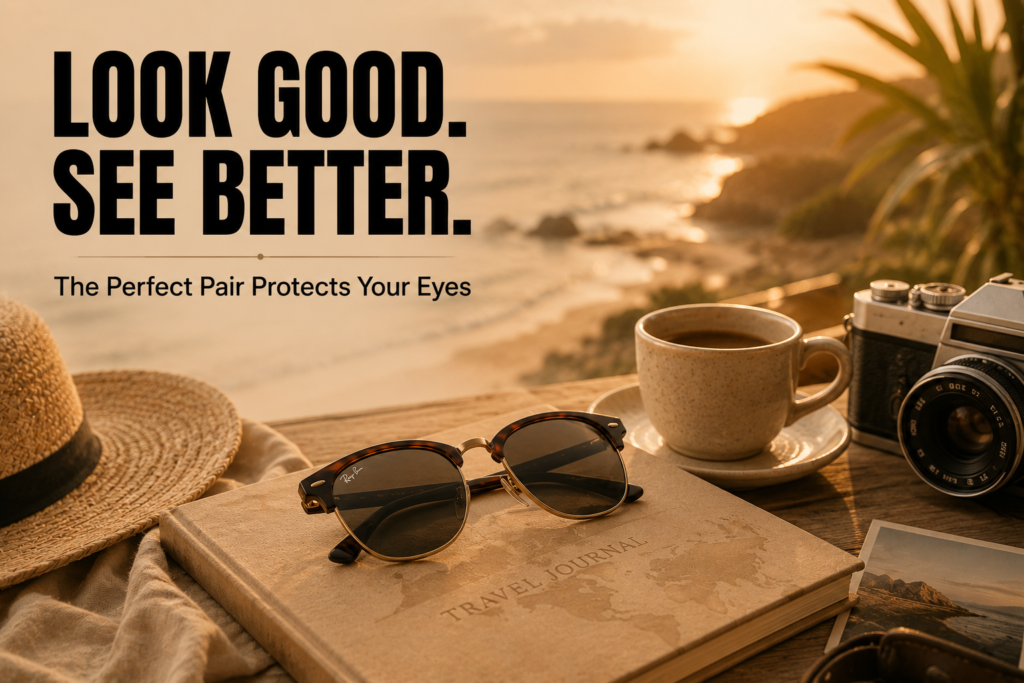
Choosing the right sunglasses is about much more than following fashion trends. A quality pair protects your eyes from harmful ultraviolet rays, improves visual comfort, reduces glare, and helps you see clearly in a wide range of environments.The best sunglasses combine 100% UV protection, comfortable fit, durable materials, and lenses suited to your lifestyle. Whether you’re driving to work, hiking mountain trails, relaxing at the beach, or simply walking around town, investing in the right eyewear is an investment in your long-term eye health.
Before making your next purchase, remember these essentials:
- Prioritize UV400 or 100% UVA/UVB protection.
- Choose a frame that fits comfortably and complements your face shape.
- Select lens colors and features based on your daily activities.
- Consider polarized lenses for reducing glare.
- Care for your sunglasses properly to extend their lifespan.
A well-chosen pair of sunglasses doesn’t just enhance your style—it helps protect one of your most valuable assets: your vision.